You can clean an oven without harsh chemicals by coating the cold interior with a thick baking soda and water paste overnight, then spraying it with white vinegar and wiping it away the next day. This method uses household staples and avoids the fumes and corrosive properties of lye-based commercial cleaners.
- The baking soda and vinegar method requires an overnight wait, unlike faster chemical sprays.
- Gather all supplies before starting to avoid handling items with paste-covered hands.
- Always work on a cold oven and remove all racks and loose debris before applying paste.
- Spread the baking soda paste thickly over greasy areas, avoiding heating elements and sensors.
- Use a plastic or silicone scraper for stubborn dried paste to prevent scratching enamel or glass.
- Microfiber cloths are recommended for a streak-free finish on glass, as paper towels shed fibers.
Empty the oven
Take out racks and anything else inside.
Mix the paste
Combine baking soda and water in a bowl.
Spread it over the interior
Smear paste across all oven surfaces.
Let it sit overnight
Close the door and leave paste for 12 hours.
Wipe out the dried paste
Remove as much dried baking soda as possible.
The simplest way to learn how to clean an oven without harsh chemicals is to coat the cold interior with a thick baking soda and water paste, leave it overnight, then spray on a little white vinegar and wipe everything away the next day. Baking soda is a mild abrasive and a mild alkali, so it lifts grease on contact while the vinegar foams up and loosens any paste you missed. For the racks and the glass door, the same two ingredients do almost all of the work, with soaking and patience doing the rest.
For stubborn dried paste, a plastic or silicone scraper is effective without damaging enamel or glass.
This guide walks through the overnight baking soda method step by step, then covers oven racks, the glass door, when a self-cleaning or steam cycle makes sense, the mistakes that damage ovens, and how often the job really needs doing. Everything here leans on household staples rather than lye-based sprays, so it suits homes with kids, pets, and anyone who would rather not breathe fumes while they cook dinner.
Why skip the harsh chemicals in the first place?
Most heavy-duty oven sprays are built around sodium hydroxide, better known as lye. Safety data sheets for popular products label them as corrosive, warn that the formula “will burn eyes and skin,” and call for use “with adequate ventilation,” rubber or PVC gloves, and eye protection. Sodium hydroxide itself is not very volatile, so the bigger inhalation risk comes from the aerosol mist, and some spray cans also carry flammable propellants like isobutane.
None of that makes commercial cleaners useless, and they are genuinely fast on baked-on carbon. But for routine kitchen grime, baking soda and vinegar get you most of the way there with ingredients you can safely handle barehanded (though gloves still keep the mess down). The trade-off is time: the natural route asks for an overnight wait, while a chemical spray works in minutes. The comparison table later in this guide lays that out directly.
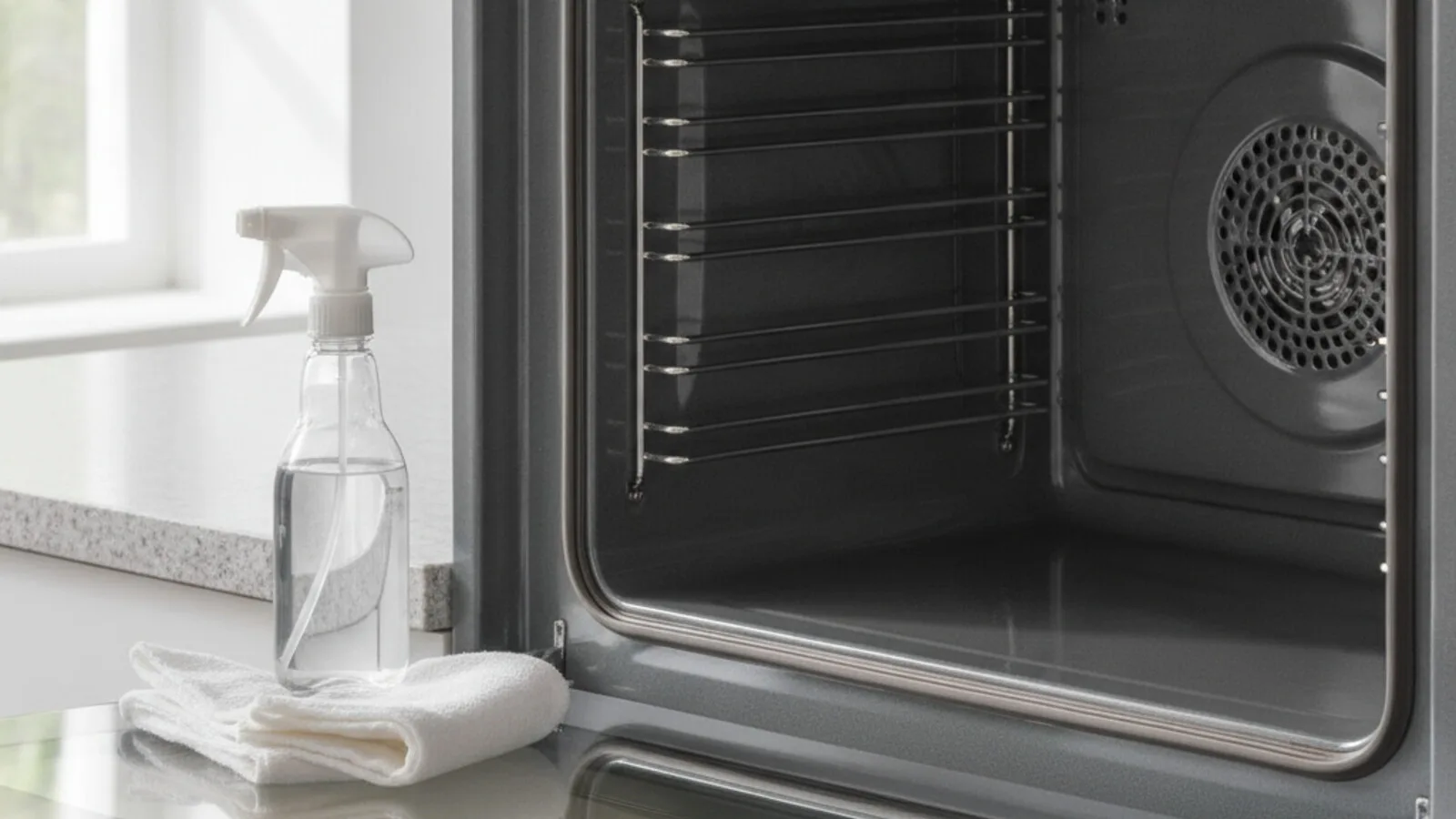
What do you need to clean an oven naturally?
Gather your supplies before you start so you are not hunting for a cloth with paste-covered hands. A basic natural oven-cleaning kit looks like this:
- Baking soda (sodium bicarbonate) — roughly half a cup for the oven interior, plus more for racks and the door glass.
- White vinegar in a spray bottle, for the fizzing finish that lifts leftover paste.
- Water, added a few tablespoons at a time to make a spreadable paste.
- A small bowl and a spatula or spoon for mixing and spreading.
- Rubber gloves — optional with baking soda, but the job is messy.
- Several damp cloths or sponges, plus a clean, lint-free microfiber cloth for a streak-free finish on glass.
- A plastic or silicone scraper for stubborn dried paste (avoid metal, which scratches enamel and glass).
- Dish soap and a bathtub or large tub if you plan to soak the racks.
- An old toothbrush or soft scrub brush for rack crevices and corners.
Keep paper towels out of the lineup for the glass itself; they tend to shed fibers that stick to the surface. Save them for wiping up the worst of the loosened gunk, then switch to microfiber for the final pass.
How to clean an oven with baking soda, step by step
This is the core method, and it is the reason a clean oven with baking soda has become the go-to natural approach. Work on a cold oven, never a warm one, and give yourself an evening plus the next morning. Here is the full sequence:
- Empty the oven and pull the racks. Take out the oven racks, pizza stones, thermometer, and anything else inside. Set the racks aside to soak separately (covered in the next section). Scrape or sweep out any loose crumbs and burnt debris from the floor of the oven so the paste can grip the grease, not the crumbs.
- Mix the paste. In a bowl, combine about half a cup of baking soda with three to four tablespoons of water, adding water a little at a time until you get a spreadable paste roughly the thickness of shaving cream or cake frosting. You can nudge the ratio either way; the goal is a mix that clings to vertical walls without sliding off.
- Spread it over the interior. Using gloved hands or a spatula, smear the paste across the back wall, sides, floor, and ceiling of the oven. Pile it on thicker over greasy, darkly stained patches. The paste often turns brownish as it contacts grease, which is normal. Deliberately avoid the heating elements, the fan opening at the back, any exposed wiring, and the temperature sensor — more on why below.
- Let it sit overnight. Close the door and leave the paste to work for at least 12 hours, or simply overnight. Heavier buildup benefits from the longer end of that range. This is where the method does its quiet work, so resist the urge to rush it.
- Wipe out the dried paste. The next day, use a damp cloth to remove as much of the dried baking soda as you can. A plastic or silicone spatula helps scrape off patches that have cemented themselves to the enamel. Re-rinse your cloth often; you are moving a surprising amount of grime.
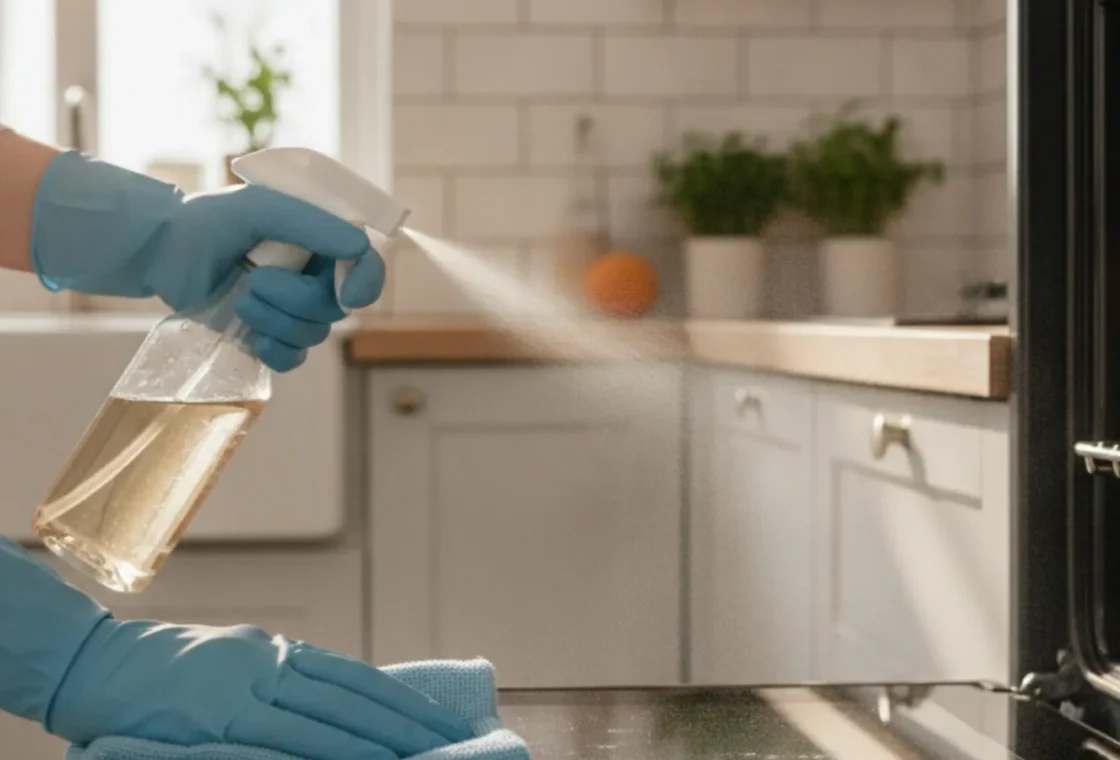
- Spray with vinegar. Pour white vinegar into a spray bottle and mist any spots where baking soda residue remains. You will see it foam and fizz as the acid reacts with the alkaline bicarbonate — that reaction helps lift the last of the stuck-on paste.
- Do a final wipe. Go over everything once more with a clean, damp cloth until no chalky residue or streaks remain. If stubborn spots persist, repeat the paste-and-wait on just those patches rather than re-coating the whole oven.
- Dry and reassemble. Wipe the interior dry, let any dampness near the back evaporate fully, then slide the cleaned racks back in once they are done soaking.
If your oven is only lightly soiled, a thinner paste and a shorter wait of an hour or two may be plenty. The overnight timing is for the baked-on jobs.
How do you clean oven racks without scrubbing for hours?
Oven racks are the part people dread, because baked-on grease welds itself to the bars. The trick for how to clean oven racks is to let a long soak do the scrubbing for you. The bathtub is the easiest place to do this, simply because the racks fit flat and stay fully submerged.
Line the bottom of the tub with old towels to protect the enamel from scratches, lay the racks on top, and run hot water until they are covered by a couple of inches. Then add your degreaser of choice:
- Dish soap soak: Pour in roughly a quarter cup of dish soap, swish to distribute, and leave the racks for several hours or overnight.
- Baking soda soak: Add around a cup of baking soda (and a squirt of dish soap for extra grease-cutting) to the hot water and soak for four hours up to overnight.
- Baking soda plus vinegar: Sprinkle the racks with baking soda, pour vinegar over to create a fizz, and once it settles, cover with hot water and soak overnight.
In the morning, the grease should wipe off with an old dish towel, scouring pad, or an old toothbrush worked into the corners where bars cross. Rinse thoroughly — a garden hose or the shower makes quick work of it — and dry before returning the racks to the oven. One caveat worth flagging: on stainless steel racks, both baking soda and a dish-soap-and-dryer-sheet soak can leave a faint film, so rinse extra well and buff dry if yours are stainless.
No bathtub? A large storage tote, a deep sink, or even a trash bag sealed around the racks with the paste inside can substitute, though the tub remains the roomiest option.
How do you clean oven glass so it is actually clear?
A filmy window is the most visible sign of a dirty oven, and happily, how to clean oven glass comes down to the same baking soda paste at a thinner consistency. Start by scraping off any stuck-on food with a plastic or silicone scraper — never a metal blade on glass.
For a standard door, mix about half a cup of baking soda with enough water to reach a shaving-cream texture, then smear it across every square inch of the inside glass. Let it settle for at least 15 to 20 minutes so it can loosen the cooked-on film; heavier staining can sit longer. If you like, spritz white vinegar over the paste and let it fizz to help break down grease.
Wipe the residue away with a damp cloth, then buff the glass dry with a clean microfiber cloth for a streak-free finish. Skip paper towels here, since the fibers cling to glass. As you work, keep paste and liquid away from the heating elements and the door vents.
Grime trapped between the panes is a different problem. Some ovens let you reach it through slots along the bottom edge of the door using a thin cloth wrapped around a flat tool, while others require removing the door entirely (check your owner’s manual, as door removal varies by model). If you are not comfortable disassembling the door, leaving the interior panes to a cleaning that coincides with any service visit is a reasonable call.
What is the best way to clean a greasy oven fast?
When you need to clean a greasy oven that is more than lightly soiled, a few adjustments speed things up without reaching for lye. First, tackle grease while it is fresh: a quick wipe after a messy roast prevents the baked-on layers that force the overnight treatment later.
For an already-greasy oven, lay the baking soda paste on noticeably thicker over the worst zones and extend the soak toward the full overnight. The vinegar step matters more here, because the foaming reaction is what finally releases hardened grease that a single wipe leaves behind. Expect to repeat the paste on the most stubborn baked-on carbon rather than clearing it in one pass. Warm (not hot) grease wipes more easily than cold, so some people run the oven briefly, switch it off, and let it cool to just-warm before applying paste — useful, but keep the paste off any element that is still hot.
Natural vs. Chemical Oven Cleaning
This table compares the key aspects of cleaning an oven with natural ingredients versus commercial chemical sprays.
| Feature | Natural (Baking Soda & Vinegar) | Chemical (Lye-based Spray) |
|---|---|---|
| Main Ingredient | Baking soda, white vinegar | Sodium hydroxide (lye) |
| Wait Time | 12+ hours (overnight) | Minutes |
| Safety | Safe for bare hands (gloves optional) | Corrosive, requires gloves, eye protection, ventilation |
| Fumes | Minimal to none | Strong, potentially harmful aerosol mist |
| Effectiveness | Good for routine grime | Fast on baked-on carbon |
Should you use the self-cleaning cycle instead?
Many ranges include a self-cleaning oven cycle, and it is genuinely effective on heavy soil — but it comes with real caveats. The cycle works by heating the oven to roughly 800°F to 1,000°F, hot enough to burn food residue down to a powdery ash you sweep out afterward. The door locks automatically and the run can last anywhere from two to about six hours.
The catches are heat and fumes. Burning residue and the hot enamel can release smoke and fumes, which are worse the dirtier the oven is, so manufacturers advise running it before the oven gets heavily soiled, and keeping the kitchen well ventilated. People with asthma or other respiratory conditions may want to leave the room. The single most important warning concerns birds: appliance manuals state that fumes from a self-cleaning cycle may be harmful or even fatal to pet birds. If you keep birds, move them out of the home entirely, or at minimum to a closed, well-ventilated room far from the kitchen, before you start — or skip the cycle in favor of a manual or steam clean.
A few more rules: never use chemical oven cleaner inside a self-cleaning oven, as the harsh ingredients can damage the special pyrolytic enamel coating, and do not block the oven vents during the cycle. For perspective, one reported analysis notes that aside from specific product recalls, there has not been a pattern of widespread fires tied to self-cleaning cycles — the routine precautions, not panic, are what matter.
What about the steam-cleaning function?
Some ovens offer a steam-clean cycle, which is the gentle middle ground between scrubbing and the high-heat self-clean. It is designed for light soil, not baked-on disasters. The typical routine, per manufacturer manuals: start with a cold oven, pour a measured amount of water (one GE manual specifies about 8 ounces) into the oven floor, and run the cycle, which counts down on the display. The water turns to steam and the heat-plus-moisture softens light grime so it wipes away easily afterward.
Two rules come straight from the manuals. Use plain water only — GE’s guide warns against adding solutions or chemicals of any kind to the water. And start cold, because manufacturers note the steam works faster when the oven is not already hot. Steam cleaning lets you avoid the toxic chemicals in many commercial cleaners, but it will not conquer heavy carbon on its own; think of it as regular maintenance between deeper cleans.
Which method should you choose?
The three realistic routes trade effort, time, and caution differently. This comparison assumes a typical household oven:
| Method | Effort | Time | Main caution |
|---|---|---|---|
| Baking soda + vinegar | Moderate hands-on work: spreading paste, wiping, some scraping | Long overall (overnight wait), but little active time | Keep paste off heating elements, fan, and sensors; repeat on stubborn spots |
| Commercial oven cleaner | Low physical effort; spray and wipe | Fast — often minutes to an hour of dwell time | Corrosive lye; needs gloves, eye protection, and good ventilation; keep off self-clean enamel and away from skin |
| Self-clean cycle | Very low: push a button, sweep ash afterward | Long (roughly 2–6 hours) plus cool-down and lock time | Extreme heat and fumes; ventilate, remove pet birds from the home, never add chemical cleaner, don’t block vents |
A reasonable default for a chemical-free household: baking soda and vinegar for routine cleaning, a steam cycle for light upkeep if your oven has one, and the self-clean cycle reserved for occasional heavy jobs with the bird and ventilation precautions firmly in place.
What mistakes should you avoid when cleaning an oven?
A handful of missteps turn a straightforward clean into a repair bill. Steer clear of these:
- Soaking or spraying the heating elements. Keep moisture, paste, and scrubbing away from the exposed bake and broil elements, the convection fan opening at the back, exposed wiring, the temperature sensor, and the controls. Cleaner on a hot element can start a fire, and scrubbing even a cold element can damage it.
- Working on a warm oven with chemicals or paste on hot metal. Let the oven cool before you start; applying anything to hot surfaces is both a burn risk and a fire risk.
- Using metal scrapers or steel wool on glass and enamel. They scratch permanently. Use plastic or silicone scrapers instead.
- Putting chemical oven cleaner in a self-cleaning oven. It can ruin the pyrolytic enamel coating that makes the self-clean cycle work.
- Mixing cleaning products. Never combine a commercial cleaner with vinegar or other products; sodium hydroxide reacts badly with acids. Pick one approach and stick with it.
- Running self-clean with birds in the house. The fumes can be fatal to them. Relocate birds first, every time.
- Using paper towels on the door glass. They leave clinging fibers; microfiber gives a cleaner, streak-free result.
- Skipping the manual. Cleaning methods, door removal, and whether any cleaner voids the warranty all vary by model. When in doubt, your owner’s manual wins.
How often should you clean your oven?
There is no universal schedule, because it depends on how hard you cook. As a working rule, a deep clean every three to six months suits most households, and heavier cooking or frequent spills push that toward the shorter end. The bigger lever is light maintenance: a quick wipe of fresh spills after the oven cools, and the odd steam cycle if you have one, prevent the baked-on layers that make deep cleaning such a chore. Self-cleaning cycles, run occasionally and before the oven is heavily soiled, round out the routine for those who use them.
Avoid applying baking soda paste to heating elements, the fan opening, exposed wiring, or the temperature sensor.
Natural oven-cleaning checklist
Keep this quick reference handy for your next clean:
- Oven fully cool and emptied; loose crumbs swept out.
- Racks pulled and set to soak in hot water with dish soap or baking soda.
- Half a cup of baking soda mixed with water into a shaving-cream paste.
- Paste spread over interior walls, floor, and ceiling — kept off elements, fan, wiring, and sensor.
- Thinner paste applied to the inside door glass; stuck-on food scraped with plastic first.
- Everything left to sit at least 12 hours or overnight (15–20 minutes is enough for the glass).
- Dried paste wiped out; white vinegar sprayed on residue to foam and lift.
- Final wipe with a clean damp cloth; glass buffed dry with microfiber for no streaks.
- Racks scrubbed, rinsed thoroughly, dried, and returned.
- Interior dried; no standing moisture near the back before reassembling.
- Pet birds relocated from the home if you ever run the self-clean cycle.
Cleaning an oven without harsh chemicals is less about a secret product and more about letting time and a mild abrasive do the heavy lifting. Coat it, wait, wipe, and finish with vinegar — then stay ahead of the grease with the occasional quick wipe so the next deep clean is an easy one.
What works well
- Uses household staples
- safe for homes with kids and pets
- avoids harsh fumes
- effective for routine grime
Watch out for
- Requires an overnight wait
- slower than chemical sprays
Frequently Asked Questions
How do you clean an oven with baking soda and vinegar?
Coat the cold interior with a paste of about half a cup of baking soda and a few tablespoons of water, leave it overnight (at least 12 hours), wipe out the dried paste, then spray white vinegar on any residue so it foams and wipe clean.
How do you clean oven racks?
Line a bathtub with old towels, lay the racks in, cover with hot water, and add about a quarter cup of dish soap or a cup of baking soda. Soak several hours or overnight, scrub with an old toothbrush or scouring pad, then rinse and dry.
How do you clean oven door glass without streaks?
Scrape off stuck food with a plastic scraper, spread a shaving-cream-thick baking soda paste over the glass, wait 15 to 20 minutes, wipe with a damp cloth, then buff dry with microfiber. Avoid paper towels, which leave fibers.
Is the self-cleaning oven cycle safe?
It works by heating to roughly 800 to 1,000 degrees Fahrenheit and can release smoke and fumes. Ventilate the kitchen, never add chemical cleaner, don't block the vents, and relocate pet birds from the home, since the fumes can be fatal to them.
How often should you clean your oven?
A deep clean every three to six months suits most homes, sooner if you cook heavily or spill often. Wiping fresh spills after the oven cools and running an occasional steam cycle keeps buildup from forcing a bigger job.