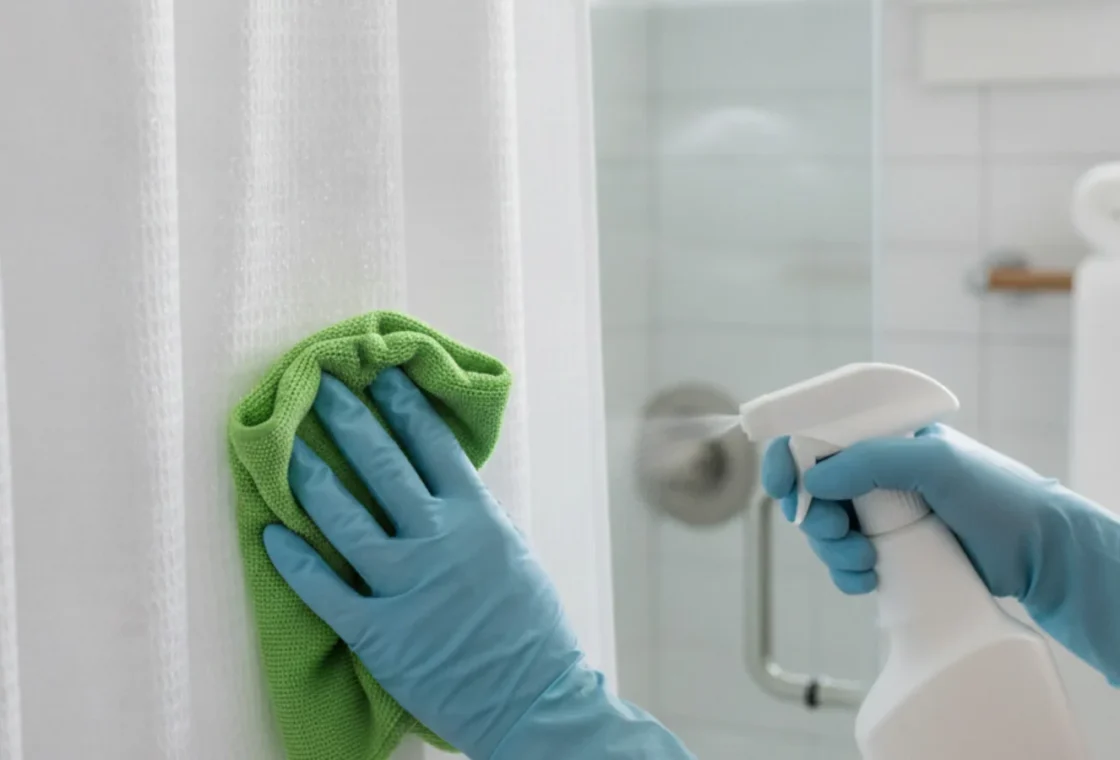
You can clean most fabric shower curtains and plastic or vinyl liners in a washing machine. Add a couple of old bath towels to the load for scrubbing and balance, along with baking soda in the wash and vinegar in the rinse.
- Most fabric shower curtains and plastic liners are machine-washable, often together.
- Add two or three old bath towels to the wash to scrub the curtain and balance the load.
- Baking soda goes into the wash cycle, and white vinegar goes into the rinse cycle.
- Use warm water for fabric curtains, cold or lukewarm for plastic liners, or warm-to-cool for mixed loads.
- Always check the care tag on your shower curtain for specific washing instructions.
Unhook and remove rings
Take off all hooks and rings.
Inspect and fold
Fold moldy sections inward to contain spores.
Load the drum
Place curtain and towels in the washing machine.
Add detergent and baking soda
Put detergent and baking soda directly in the drum.
Set wash cycle
Choose a gentle or delicate cycle.
Add vinegar to rinse
Pour vinegar into the rinse cycle dispenser.
Learning how to clean a shower curtain comes down to one reassuring fact: the thing you have been eyeing with suspicion is almost certainly machine-washable. Both fabric curtains and most plastic or vinyl liners can go straight into your washing machine with a couple of bath towels, a scoop of baking soda, and a splash of vinegar in the rinse. The soap scum, the pink slime near the bottom hem, the hazy film of body oil and hard-water minerals, the creeping gray-black mildew in the folds, most of it lifts off in a single warm, gentle cycle. The catch is in the details: the water temperature, what you add and when, and the drying step that can quietly ruin a vinyl liner if you get it wrong.
Do not mix baking soda and vinegar in the same wash cycle, as they neutralize each other.
This guide walks through the whole job, fabric curtains and plastic liners separately because they behave differently, plus a numbered machine-wash routine, targeted mold and mildew treatment, the mistakes that destroy a good liner, and the handful of daily habits that keep the whole thing from getting gross again. One rule applies before anything else: check the care tag sewn into the curtain. Manufacturers know their own material, and a tag that says “hand wash only” or specifies a cold wash overrides any general advice here.
Can you wash a shower curtain in the washing machine?
Yes, and that is the good news that makes this an easy chore. Most fabric shower curtains, polyester, cotton blends, and the like, are machine-washable, and so are most plastic and vinyl liners despite how flimsy they feel. You can even wash a fabric curtain and its plastic liner together in the same load, which is efficient and lets the two surfaces rub against each other for a little extra scrubbing.
The reason a liner survives the machine is counterintuitive: you do not wash it alone. You add two or three old bath towels to the drum. The towels provide gentle abrasion that scours soap scum off the plastic, they stop the liner from balling up and sticking to itself, and they balance the load so the machine does not thump its way across the floor. Without the towels, a lone plastic liner tends to twist into a useless wrinkled knot and comes out barely cleaner than it went in.
Water temperature is the one point where sources genuinely disagree, and the disagreement maps onto the material. Fabric curtains tolerate warm water well. Plastic and vinyl liners are safer in cold or lukewarm water, because real heat can warp, crinkle, or even partially melt thin vinyl. When you wash the two together, split the difference and use a warm-to-cool setting on the gentle or delicate cycle. If your liner is heavy, stiff vinyl, lean toward cold. And if the care tag specifies a temperature, follow it rather than guessing.
What you need to clean a shower curtain
You do not need specialty products. Almost everything here is probably already under your sink:
- Two or three old bath towels for the wash, white or color-safe ones so no dye transfers onto the curtain
- Regular laundry detergent, your normal amount
- Baking soda, roughly half a cup, added to the wash
- White vinegar, half a cup to a cup, added to the rinse (not the wash)
- A soft-bristled brush or non-scratch sponge for spot-treating stubborn stains
- Distilled white vinegar in a spray bottle, or a diluted bleach solution for vinyl only, for mold
- Rubber gloves, and an open window or running fan if you use bleach
One chemistry note worth understanding before you start: baking soda and vinegar neutralize each other. Mixed together in the same water, they fizz, cancel out, and leave you with salty water that cleans very little. That reaction is exactly why the routine below keeps them apart, baking soda goes into the wash cycle, vinegar goes into the separate rinse cycle. Do not dump both into the drum at the same time and expect double the cleaning power; you get roughly none.
How do you machine-wash a shower curtain step by step?
This routine works for a fabric curtain, a plastic or vinyl liner, or both together. Confirm the care tag allows machine washing first, then work through it in order.
- Unhook the curtain and remove the rings. Take off every hook or ring, both the curtain’s and the liner’s. Leaving them on strains the grommets and can crack plastic rings in the drum.
- Inspect and fold in the worst spots. If there is visible mold or mildew, fold those sections inward before you move the curtain through your home, so you are not shedding spores down the hallway.
- Load the drum with the curtain and two or three towels. The towels are not optional for a plastic liner, they do the scrubbing and keep the load balanced. Do not overstuff; the items need room to move.
- Add your normal detergent plus about half a cup of baking soda. Put the baking soda directly in the drum with the laundry. It deodorizes and gives detergent a mild abrasive boost against soap scum.
- Set a gentle or delicate cycle at the right temperature. Warm for fabric, cold to lukewarm for plastic and vinyl, warm-to-cool for a mixed load. Gentle agitation matters, an aggressive cycle can crack brittle vinyl.
- Add vinegar to the rinse. Pour half a cup to a full cup of white vinegar into the fabric-softener dispenser or add it manually at the start of the rinse cycle. The vinegar cuts hard-water film, strips residual soap, and helps knock back mildew, and because it lands in the rinse it never meets the baking soda.
- Pull everything out the moment the cycle ends. This is the step people skip and regret. A curtain left sitting wet in the drum grows the exact mildew you just washed away. For delicate or heavy liners, some people remove the item before the spin cycle entirely and let it drip rather than risk the high-speed spin stressing the plastic.
- Rehang immediately to air-dry. Hang the curtain and liner back on the rod, spread full-width, and let them drip and air-dry in place. Drying advice differs by material and matters enough to get its own section below.
How do you clean a fabric shower curtain?
Fabric curtains are the forgiving ones. Polyester and cotton-blend curtains handle warm water and a normal gentle cycle comfortably, with detergent and baking soda in the wash and vinegar in the rinse exactly as above. The towels still help, though a fabric curtain is less dependent on them than a floppy plastic liner.
The place fabric curtains punish carelessness is drying and heat. Many fabric curtains can take a short tumble on low or no heat to shake out wrinkles, but plenty cannot, and a hot dryer can shrink a cotton blend or set permanent creases in polyester. The safest universal move is to rehang the damp curtain on the rod and let gravity pull the wrinkles out as it dries. If your curtain genuinely is dryer-safe per its tag, use the lowest heat and pull it out while slightly damp to hang.
Bleach deserves a specific warning for fabric: do not reach for chlorine bleach on a colored or patterned fabric curtain. It will strip the dye and leave you with pale blotches. For colored fabrics, stick to oxygen-based (color-safe) bleach or the vinegar-and-baking-soda approach. Save chlorine bleach for white curtains and bleach-safe vinyl, and even then check the tag.
How do you clean a plastic shower liner?
A plastic or vinyl liner is where the pink and black gunk actually lives, because it is the surface that stays wettest longest. The machine routine handles it well: liner plus towels, cold-to-warm gentle cycle, baking soda in the wash, vinegar in the rinse. The towels are doing real work here, scrubbing the plasticky film that soap and body oil leave behind.
For spot problems, lay the liner flat or leave it hanging and treat the stains directly. A spray of equal parts white vinegar and water, left to sit 15 to 20 minutes, loosens mildew and mineral haze. A paste of baking soda and a little water works on caked-on soap scum, scrubbed in with a soft-bristled brush. The word “soft” matters: a stiff brush or abrasive scrubber scratches vinyl, and those micro-scratches become new homes for mildew, so you trade a clean liner now for a dirtier one later.
The single most important rule for plastic and vinyl is the drying rule: never put it in the dryer. Even low heat can melt, warp, or permanently crinkle a thin vinyl liner into something you have to throw out. Air-dry only. Wring out the excess water gently, rehang it on the rod spread to full width, and let it dry in open air.
There is also a point where cleaning stops being worth it. Cheap plastic liners are consumables. Most guidance lands on replacing a plastic liner every six to twelve months, and immediately if it has gone pink, slimy, or black with mold that will not scrub off, or if it is torn, cracked, cloudy, or smells musty after washing. A liner costs a few dollars; your time scrubbing a liner that is already failing is worth more than that. Wash it to extend its life, but do not nurse a dead one.
Shower Curtain Material Comparison
Different shower curtain materials have specific washing requirements for best results.
| Material | Water Temperature | Additions | Drying |
|---|---|---|---|
| Fabric | Warm | Baking soda, detergent | Air dry or low heat |
| Plastic/Vinyl | Cold to lukewarm | Baking soda, detergent | Air dry only |
| Mixed Load | Warm-to-cool | Baking soda, detergent | Air dry or low heat (fabric only) |
How do you remove mold and mildew from a shower curtain?
Mold and mildew are the whole reason most people go looking for how to clean a shower curtain in the first place, those creeping gray, black, or pink spots along the hem and in the folds. The approach depends on the material and on how aggressive you are willing to be.
Start by containing it. Before you take the curtain down, fold the moldy sections inward so you are not flinging spores around the bathroom and house. Then choose your treatment:
- Vinegar soak or spray (safe for everything). Spray the mildewed areas with equal parts white vinegar and water, or undiluted vinegar for heavier growth, and let it sit 15 to 20 minutes before machine-washing. This is the first thing to try on any material because it cannot damage fabric or plastic.
- Baking soda paste for stubborn buildup. Where mildew mixes with thick soap scum, a baking soda paste scrubbed gently with a soft brush lifts both.
- Diluted bleach for vinyl and white curtains only. For stubborn mold on a bleach-safe vinyl liner or a white fabric curtain, a diluted bleach solution tackles what vinegar leaves behind. Never use it on colored fabric, and always check the care tag.
After treating, run the curtain through the machine wash, then air-dry it completely. Mold needs moisture, so a curtain that is not dried fully will simply regrow it.
One safety rule is absolute and has no exceptions: never mix bleach with vinegar, or with any acid or ammonia. The combination releases chlorine gas, which is genuinely dangerous to breathe. If you use vinegar first and then decide to escalate to bleach, rinse the curtain thoroughly with plain water in between so the two never meet, and work with the window open or the fan running.
If spots remain after a bleach treatment and a wash, the growth has worked its way into the material and is not coming out. On a cheap plastic liner, that is your cue to replace it rather than keep fighting.
Fabric curtain vs. vinyl liner: how they compare
The two materials share a wash routine but diverge on heat tolerance, drying, and lifespan. This table sums up the practical differences.
| Factor | Fabric curtain | Vinyl / plastic liner |
|---|---|---|
| Machine washable? | Usually yes (check tag) | Usually yes, with 2–3 towels |
| Water temperature | Warm, gentle cycle | Cold to lukewarm, gentle cycle |
| Add to wash | Detergent + baking soda | Detergent + baking soda + towels |
| Add to rinse | White vinegar | White vinegar |
| Machine dryer? | Low/no heat only if tag allows; air-dry is safer | Never, heat warps and melts it |
| Best drying method | Rehang on rod, air-dry | Rehang on rod, air-dry, spread full width |
| Chlorine bleach | White only; never on colors | Yes if bleach-safe, diluted |
| Typical lifespan | Years with regular washing | 6–12 months, then replace |
What not to do: common shower curtain cleaning mistakes
Most ruined curtains and liners are casualties of a few avoidable errors:
- Machine-drying a vinyl liner. The most common and most destructive mistake. Heat warps, crinkles, and melts thin vinyl. Air-dry it, always.
- Using chlorine bleach on a colored fabric curtain. It strips dye and leaves permanent pale patches. Use color-safe oxygen bleach or vinegar instead.
- Mixing bleach and vinegar. This produces toxic chlorine gas. Keep them completely separate, and rinse thoroughly if you switch from one to the other.
- Adding baking soda and vinegar to the same cycle. They neutralize each other. Baking soda in the wash, vinegar in the rinse.
- Washing a plastic liner with no towels. It twists into a wrinkled knot, cleans poorly, and throws the machine off balance.
- Leaving the curtain wet in the drum. Sitting damp laundry regrows mildew within hours. Remove and rehang the instant the cycle ends.
- Scrubbing vinyl with a stiff, abrasive brush. Scratches become new mildew colonies. Use soft bristles only.
- Ignoring the care tag. The manufacturer’s instructions for your specific curtain beat any general rule.
- Cleaning a liner that is already finished. If mold won’t scrub off or the plastic is torn and cloudy, replace it, don’t keep scrubbing.
How do you prevent shower curtain mildew?
Cleaning is reactive; prevention is what keeps you from doing it every few weeks. Mildew needs trapped moisture, so every preventive habit is about drying the curtain faster and keeping the bathroom air moving.
The biggest single lever is to spread the curtain out after every shower instead of bunching it to one side. A bunched curtain traps water in its folds, and those damp folds are exactly where the gray-black mildew starts. Pull it closed across the full width of the rod, leaving a few inches of gap at each end for air to circulate, so the whole surface dries evenly.
Ventilation is the other half. Run the bathroom exhaust fan during your shower and for several minutes afterward, long enough for the fog on the mirror to clear, or open a window if you have one. Crucially, the fan has to vent outdoors, not into the attic or a wall cavity, or you are just relocating the moisture. A fan with a timer or humidistat makes this automatic.
A few more small habits compound the effect:
- Spread the curtain full-width after every shower so folds cannot trap water
- Run the exhaust fan during and for 5 to 10 minutes after showering, and confirm it vents outside
- Open a window when you have one, to speed the air exchange
- Squeegee or towel the walls and shake water off the bottom of the liner to cut the moisture load
- Launder the curtain and liner regularly, roughly monthly or whenever film or spots appear, rather than waiting for a crisis
- Replace a cheap plastic liner on schedule, every 6 to 12 months, before it becomes a permanent mold reservoir
Always remove all hooks and rings before washing to prevent damage to the curtain and machine.
Your quick shower curtain cleaning checklist
Everything above, boiled down to the steps that matter:
- Check the care tag before anything else
- Remove all hooks and rings
- Fold moldy areas inward to contain spores
- Load the curtain or liner with 2–3 towels
- Add detergent plus about ½ cup baking soda to the wash
- Warm water for fabric, cold-to-lukewarm for vinyl, gentle cycle
- Add ½ to 1 cup white vinegar to the rinse, never the wash
- Spot-treat mold with vinegar spray; bleach on vinyl and whites only
- Never mix bleach and vinegar
- Remove promptly, rehang, and air-dry, never machine-dry vinyl
- Spread the curtain full-width and ventilate after every shower
- Replace a cheap plastic liner every 6–12 months
That is the entire job. Know your material, keep baking soda and vinegar in their separate lanes, respect the no-heat rule for vinyl, and build the two-second habit of spreading the curtain out when you step out of the shower. Do that and a deep clean becomes a monthly ten-minute task instead of a battle with set-in mildew, and your curtain and liner both last as long as they reasonably can.
What works well
- Machine washing is easy
- Removes most grime
- Can wash curtain and liner together
- Towels help scrub and balance
Watch out for
- Heat can damage vinyl liners
- Baking soda and vinegar neutralize each other
- Some curtains are hand-wash only
Frequently Asked Questions
Can you wash a shower curtain in the washing machine?
Yes. Most fabric curtains and most plastic or vinyl liners are machine-washable. Wash them with two or three bath towels for gentle scrubbing, your normal detergent plus about half a cup of baking soda in the wash, and half a cup to a cup of white vinegar in the rinse. Use a gentle cycle, warm water for fabric and cold-to-lukewarm for vinyl, and always check the care tag first.
How do you remove mold and mildew from a shower curtain?
Fold the moldy areas inward first to contain spores. Spray the spots with equal parts white vinegar and water, let it sit 15 to 20 minutes, then machine-wash. For stubborn mold on vinyl or white curtains, use a diluted bleach solution, but never on colored fabric and never mixed with vinegar. Dry the curtain completely afterward, since leftover moisture lets mildew regrow.
Can you put a vinyl or plastic shower curtain liner in the dryer?
No. Even low heat can warp, crinkle, or melt a thin vinyl liner and ruin it. Always air-dry plastic and vinyl liners. Wring out the excess water, rehang the liner on the rod spread to full width, and let it dry in open air. Fabric curtains can sometimes take a low or no-heat tumble if the tag allows, but rehanging to air-dry is safest for them too.
Why do you add baking soda and vinegar at different stages?
Baking soda and vinegar neutralize each other. If you mix them in the same water they fizz, cancel out, and clean almost nothing. To get the benefit of both, add baking soda to the wash cycle, where it deodorizes and boosts the detergent, and add the vinegar to the separate rinse cycle, where it cuts hard-water film and soap residue without ever meeting the baking soda.
How often should you replace a plastic shower curtain liner?
Replace a cheap plastic liner every six to twelve months as a baseline, and sooner if it has turned pink, slimy, or black with mold that will not scrub off, or if it is torn, cracked, cloudy, or smells musty after washing. Regular cleaning extends a liner's life but will not revive one that is worn out, and a few dollars for a new liner beats nursing a failing one.