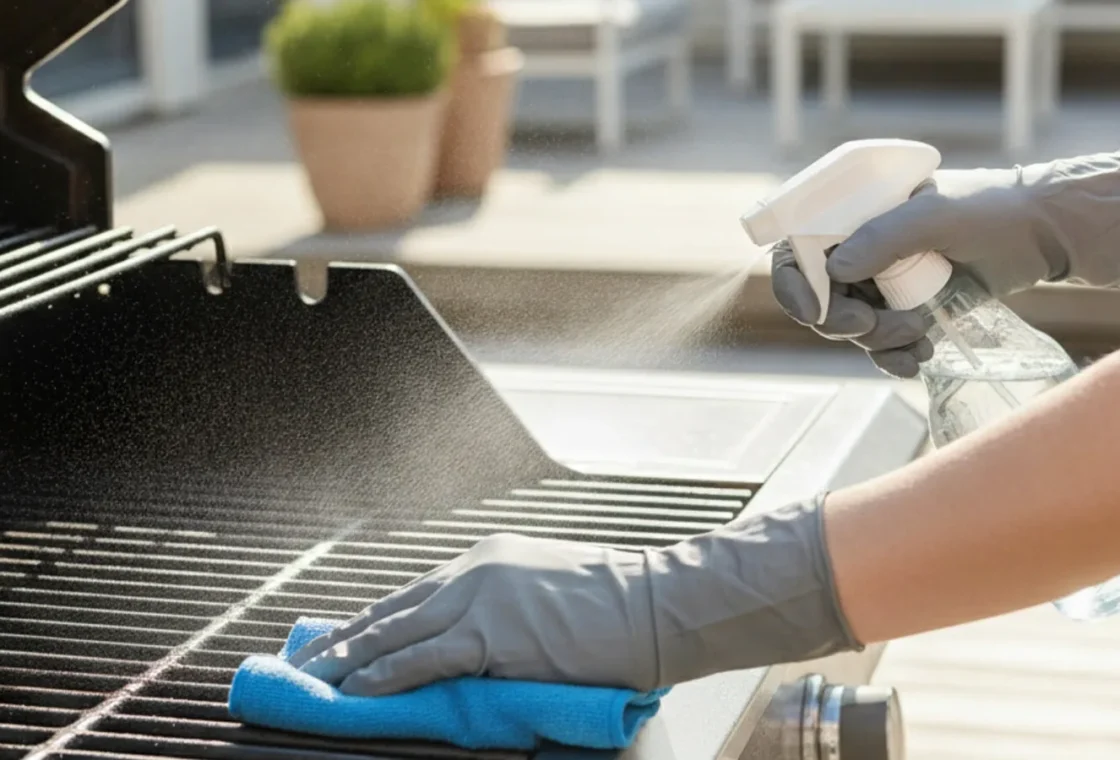
To clean a grill the right way, first burn off food residue for 10 to 15 minutes, then scrape the hot grates with a bristle-free tool. Once cool, remove and soak the grates, clean the interior, and empty the grease tray or ash pan.
- A quick burn-and-brush after every cook prevents buildup and keeps grates nonstick.
- A full teardown and deep clean of internal parts should be done a few times per season.
- Always scrape hot grates with a bristle-free tool to remove brittle ash, not raw grease.
- Wait for the grill to cool completely before cleaning the interior and grease tray to prevent burns.
- Soaking grates in warm, soapy water helps loosen stubborn food residue and makes scrubbing easier.
- Avoid using oven cleaner or harsh degreasers on cooking surfaces unless approved by the manufacturer.
Burn it off
Fire up the grill to turn food residue into ash.
Scrape hot grates
Scrape the hot grates with a bristle-free tool.
Shut down and cool
Turn off the grill and let it cool completely.
Remove internal parts
Lift out the cooking grates and flavorizer bars.
Soak the grates
Submerge grates in warm, soapy water.
Clean the interior
Scrape carbon flakes and grease from the lid and firebox.
To learn how to clean a grill the right way, fire it up for 10 to 15 minutes to burn food residue into brittle ash, scrape the hot grates with a bristle-free tool, then shut it down and tackle the grease tray, interior, and exterior once everything is cool. A quick burn-and-brush belongs after every cook, while a full teardown of burners, flavorizer bars, and ash pans is a two-or-three-times-a-season job. Do both on schedule and your grates stay nonstick, your flare-ups drop, and your food stops tasting like last month’s dinner.
Do not reach into a firebox or ash catcher until you are certain there are no live embers.
This guide walks through the whole routine: what you need, a numbered step-by-step, a comparison of grate-cleaning methods, the differences between gas and charcoal, how to handle rust, the mistakes that put metal in your food, and a maintenance schedule you can actually keep.
Why does a clean grill matter so much?
A dirty grill is not just unappetizing; it is a performance and safety problem. Carbonized gunk on the grates stops heat from transferring cleanly and makes food stick and tear. Worse, the grease that collects on flavorizer bars, in drip channels, and in the bottom tray is flammable. When those parts clog with old food and fat, you have set the stage for a grease fire, which is the single most common cause of grill fires. Cleaning is fire prevention first and flavor second.
There is also a flavor tax. Old, rancid grease and charred buildup carry stale, acrid notes into whatever you cook next. And on the health side, heavily charred residue is simply not something you want transferring onto fresh food. The payoff for 15 minutes of maintenance is even heat, better sear, fewer flare-ups, and food that tastes like what you actually put on the grates.
What do you need to clean a grill?
You do not need a specialty kit. Most of this is already in your kitchen. Gather your supplies before you start so you are not hunting for a bucket with greasy hands.
- A bristle-free grate tool: a wooden grate scraper, a coiled-wire (bristle-free) brush, a pumice grill stone, or a ball of heavy-duty aluminum foil held in long tongs.
- A plastic putty knife or bench scraper for lifting baked-on carbon off the inside walls and lid.
- Dish soap and warm water in a bucket or deep sink for soaking grates.
- Baking soda and white vinegar for paste-making and rust work.
- Nitrile or dishwashing gloves, and safety glasses if you will be scrubbing rust or spraying anything.
- Microfiber or shop cloths and paper towels.
- A stiff nylon pad or non-scratch scrubbing sponge.
- High-smoke-point cooking oil (canola, vegetable, or grapeseed) for seasoning cast-iron or steel grates afterward.
- A metal pail or galvanized can for ash from a charcoal grill, and a trash bag for debris.
Skip oven cleaner and other harsh degreasers on cooking surfaces unless your grill’s manufacturer specifically approves them. Several cleaning guides float oven cleaner as a last resort, but it is aggressive chemistry on a surface your food touches, so treat it as off-limits without manufacturer sign-off.
How do you clean a grill step by step?
This is the core routine. It works for most gas and charcoal grills; the gas-versus-charcoal differences are covered in their own section below. Read step one carefully, because timing (hot versus cool) is where people get hurt.
- Burn it off. With the lid closed, run a gas grill on high for 10 to 15 minutes, or let a charcoal grill’s fire do the same work at the end of a cook. The heat turns stuck-on food and grease into dry, flaky ash. Ash brushes away easily and does not cling the way raw grease does.
- Scrape the hot grates. While the grates are still hot, work them over with your bristle-free scraper or coiled brush, moving along the bars and then across them. If you use a foil ball in tongs, keep your hands clear of the heat. The goal is to knock off every bit of loosened carbon now, while it is brittle.
- Shut down and let it cool. Turn off the gas at the burners and at the tank or supply valve, or let the charcoal die out completely. Everything from here happens on a cool grill. Do not reach into a firebox or ash catcher until you are certain there are no live embers; charcoal can hide heat for hours.
- Remove the grates and internal parts. Lift out the cooking grates and, on a gas grill, the flavorizer bars or heat tents underneath. Set them aside for soaking or a deeper scrub.
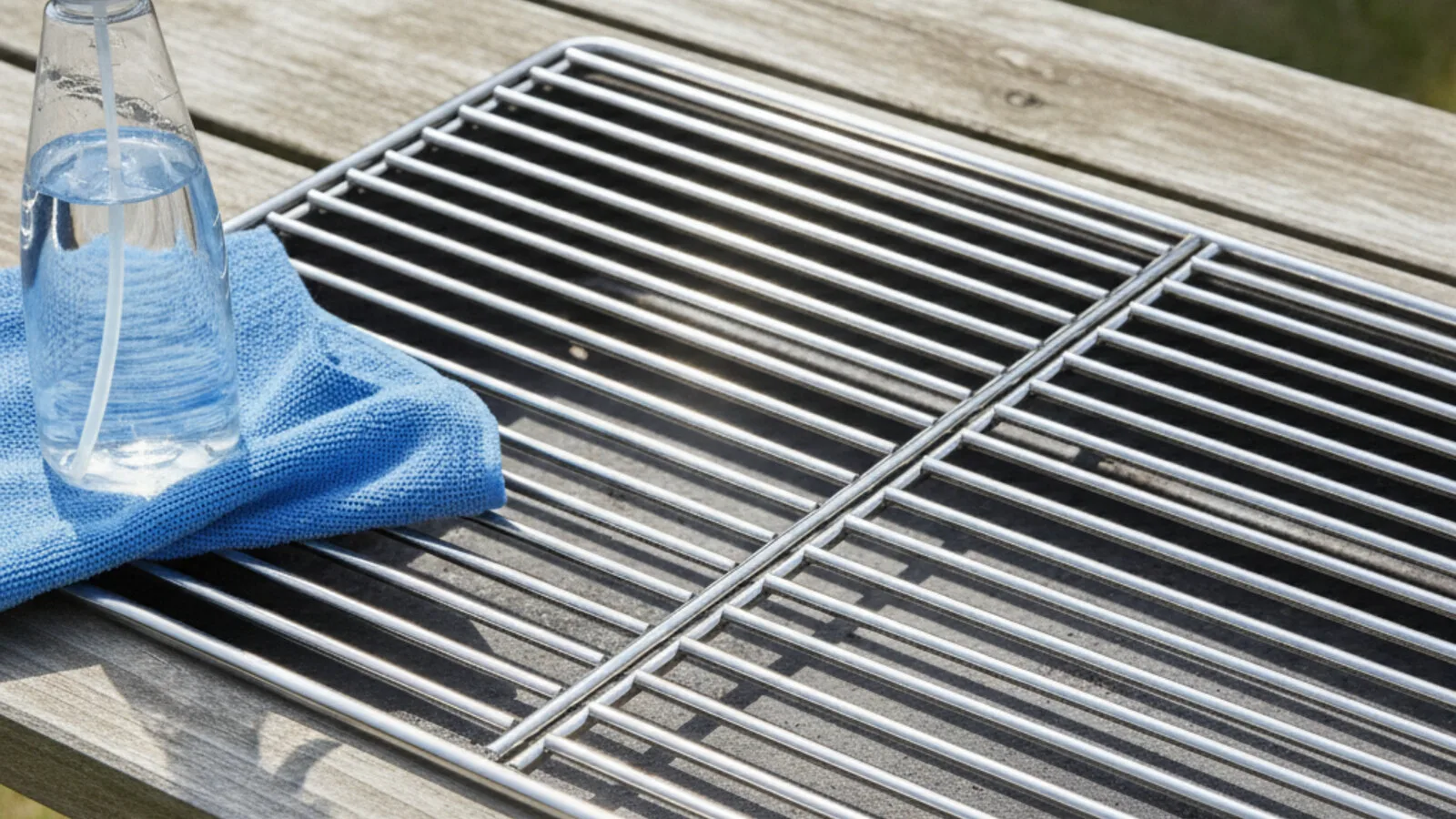
- Soak the grates. Submerge grates in warm water with a good squirt of dish soap for 15 to 30 minutes (longer for heavy buildup). For stubborn spots, sprinkle baking soda over the damp grates, let it sit about 10 minutes, then scrub. Washing off food residue first also makes any later rust treatment work better.
- Clean the interior. With a plastic scraper, push carbon flakes and grease off the inside of the lid and the firebox walls down toward the bottom tray. On a gas grill, brush loose debris off the burner tubes without jamming anything into the gas ports. Wipe the walls with a damp soapy cloth.
- Empty and wash the grease tray or ash pan. Pull the drip pan or grease tray, scrape out the sludge into the trash, and wash it with hot soapy water. Check the channels that funnel grease down to the tray and clear any blockage; a clogged channel lets grease pool inside the grill, which is a real fire hazard. On a charcoal grill, empty all the ash.
- Rinse, dry, and reassemble. Rinse grates and parts, then dry them completely. Water left on bare steel or cast iron is how rust starts. Put everything back in place.
- Re-oil the grates. Wipe a thin film of high-smoke-point oil over clean, dry grates. For cast iron especially, this is the seasoning step that keeps them nonstick and rust-resistant.
- Wipe the outside. Finish with the lid and cabinet exterior: warm soapy water for painted surfaces, and a dedicated stainless-steel cleaner (wiped with the grain) for stainless.
Which method is best for cleaning grill grates?
There is no single best way to clean grill grates; it depends on the grate material and how bad the buildup is. The comparison below lays out the common methods, what each is good at, and the catch with each. Porcelain-coated grates need gentler, non-scratch tools; bare cast iron can take more abrasion but must be dried and oiled after.
| Method | Best for | How to use it | Watch out for |
|---|---|---|---|
| Burn-off + bristle-free scraper | Routine cleaning after most cooks | Heat grates, scrape while hot along and across the bars | Does little for grease that has run off the grates |
| Balled aluminum foil in tongs | Stainless and porcelain grates, no-brush budget option | Grip a tight foil ball with tongs, scrub the bars | Sources disagree on hot vs. cool; keep hands clear and favor caution |
| Soapy-water soak | Periodic deeper cleaning, greasy buildup | Soak 15-30 min in warm soapy water, then scrub with a nylon pad | Dry thoroughly afterward to prevent rust |
| Baking soda paste | Stuck-on carbon, light surface rust | Make a thick paste with water, coat, wait ~10 min, scrub | Not strong enough for heavy rust or thick buildup alone |
| Vinegar + baking soda | Light rust and seasonal deep cleans | Apply vinegar, add baking soda, scrub (often with foil); soak overnight for heavy rust | Published ratios vary widely, so treat amounts as approximate |
| Pumice grill stone | Heavy carbon on tougher grates | Rub the stone along cool or warm grates; it conforms to the bars | Abrasive; can be too aggressive for delicate coatings |
Whatever you choose, inspect the grates before you cook again and wipe them once more. That final look is your last chance to catch anything that should not end up on your food.
Grate Cleaning Methods
Different tools offer various approaches to cleaning hot grill grates effectively.
| Method | Best For | Key Action | Safety Note |
|---|---|---|---|
| Bristle-free Scraper | Everyday buildup | Pushing off ash | Keep hands clear of heat |
| Coiled-wire Brush | General cleaning | Scrubbing along and across bars | Ensure no loose wires |
| Pumice Grill Stone | Heavy carbon | Abrading stuck-on residue | Can leave fine dust |
| Foil Ball in Tongs | Quick touch-ups | Rubbing grates | Use heavy-duty foil |
How is cleaning a gas grill different from a charcoal grill?
The burn-and-brush basics are the same, but the deep clean diverges because the two grills have different guts.
How to clean a gas grill
When you deep clean a grill that runs on gas, the hidden parts are what matter most for safety. Before anything else, turn off the gas supply at the tank or line so no fuel can flow while you work, and start on a cool grill before pulling parts.
- Flavorizer bars and heat tents: these V-shaped bars sit over the burners, spread heat, and shield the burners from drippings. Grease cakes onto them and can ignite. A pre-burn on high for 10 to 15 minutes turns most of that grease to ash; after it cools, a coarse pad or scraper finishes the job. Replace bars that are rusted through or badly warped.
- Burners: clogged burner ports cause uneven heat and hard lighting. Grease, ash, and even insect nests can block them. Gently clear the ports and brush debris off the tubes, taking care not to push gunk into the openings.
- Grease tray and drip channels: empty and scrub the tray every few cooks, and keep the channels that drain into it clear. A clogged grease path is a top fire risk.
How to clean a charcoal grill
Charcoal grills are mechanically simpler but produce ash, which is corrosive and holds moisture against the metal. The cardinal rule is patience: wait until the grill is completely cool before touching ash, because embers can smolder unseen for hours. Some grillers let spent ash rest in a covered metal can for up to a day or two to be certain nothing is still hot.
- Remove all the ash from the bowl and the ash catcher. Use the ash sweep or a small scoop and hand broom, and dump it into a metal pail, never a plastic bag or bin.
- Clear the vents so airflow is not choked by ash, which also helps the next fire light and run evenly.
- Brush the grates and wipe the bowl; a foil ball clears leftover ash and crumbs. Every few months, or at the start and end of the season, do a full soapy-water wash of the bowl and lid.
How do you clean a rusty grill?
Surface rust on grates is common and usually fixable; you do not have to replace grates at the first orange speck. To clean a rusty grill, start by washing the grates in warm soapy water, because food residue gets in the way of any rust treatment. Then match the method to how bad the rust is.
- Light rust: make a baking soda and water paste, coat the rusty areas, let it sit, and scrub with a non-scratch pad or balled foil.
- Moderate rust: one common approach is to apply white vinegar, sprinkle baking soda over it so it fizzes, and scrub. Published ratios vary from equal parts to roughly two parts vinegar to one part baking soda, so treat the exact amounts as approximate and adjust to a workable paste or soak.
- Heavy rust: soak the grates overnight in a shallow pan of a vinegar-and-baking-soda solution, then scrub. For bare cast iron, a wire pad or steel wool is acceptable; for stainless and porcelain, stick with foil so you do not scratch the finish. A kosher-salt-and-water paste is a more abrasive option for stubborn spots, after which you switch back to baking soda.
There is also a heat-assisted trick: sprinkle baking soda over the grates and warm the grill so the soda bubbles and loosens rust, then let the grates cool before the final scrub. Whatever you use, finish by rinsing and drying completely. If rust has eaten through the metal so the bars are thin, flaking, or crumbling, stop cleaning and replace the grates; weakened grates are not worth saving.
How do you season cast-iron grates after cleaning?
Bare cast iron and carbon steel rust the moment they are left wet, so seasoning is not optional with these grates. Once they are clean and bone dry, wipe a thin layer of high-smoke-point cooking oil over every surface. Heat the grill to roughly 350 to 400 degrees Fahrenheit to set the oil into a slick, protective layer. Then keep them lightly oiled after each cook so rust does not get a foothold. Porcelain-coated and stainless grates do not need seasoning; a wipe-down and dry are enough.
What are the biggest grill-cleaning mistakes to avoid?
A few habits either put you at risk or quietly damage the grill. These are the ones worth unlearning.
- Trusting an old wire-bristle brush. This is the big one. Loose bristles shed, stick to the grates, and can end up embedded in food, which is a documented injury risk. If you still own a wire brush, inspect it before every use, throw it out the moment bristles come loose, and always check the grates before cooking. Better yet, switch to a bristle-free scraper, coiled brush, pumice stone, or foil. If you use a nylon brush, know it is a lower-temperature tool and may not scrub as hard as a metal coil.
- Letting grease build up in the tray and channels. This is how grill fires start. Empty the grease tray and clear the drip channels on a regular schedule, not once a year.
- Touching ash or reaching into the firebox too soon. Charcoal embers hide heat for hours. Wait for a fully cool grill before ash removal, every time.
- Leaving grates wet. Water on bare steel or cast iron starts rust within a day. Dry completely and re-oil.
- Reaching for oven cleaner or harsh degreasers on cooking surfaces. Several guides mention it, but it is aggressive chemistry where your food sits. Skip it unless the manufacturer approves it for your model.
- Ignoring the owner’s manual. Most online cleaning advice comes from general blogs and retailers, not your grill’s maker. For warranty-sensitive parts, part replacement, or coated surfaces, check the manual first.
- Scrubbing porcelain with steel wool. Abrasive pads chip the coating and expose bare metal to rust. Match the tool to the grate material.
How often should you clean a grill?
Think in two tiers: a light clean that happens constantly and a deep clean that happens a few times a year. Exact frequency depends on how often and how greasy you cook, so treat these as sensible defaults rather than hard rules.
- After every cook: burn off and brush the grates while hot. On a charcoal grill, this is also the moment to plan ash removal once it cools.
- Every cook to weekly (charcoal): remove ash from the bowl and ash catcher. Guidance ranges from before every use to at least weekly; because ash is corrosive and traps moisture, err toward sooner, especially if the grill sits unused.
- Every few cooks: empty the grease tray or drip pan and check the drip channels on a gas grill.
- Monthly (in season): give the grates and flavorizer bars closer attention than a quick brush.
- Two to three times a season, or at both ends of it: full deep clean of burners, flavorizer bars, interior, trays, and exterior. Plan on an hour or more. Cook fatty foods or grill heavily? Do it more often.
For stubborn spots on grates, sprinkle baking soda over damp grates and let it sit for about 10 minutes before scrubbing.
Quick grill-cleaning checklist
Use this as your at-a-glance reference. The first group is the after-every-cook habit; the second is the periodic deep clean.
- Burn off on high (gas) or let the fire finish the work (charcoal) for 10 to 15 minutes.
- Scrape the hot grates with a bristle-free tool.
- Shut off the gas, or let charcoal cool completely, before going further.
- Empty the ash (charcoal) into a metal pail once fully cool.
- Check and empty the grease tray every few cooks.
- Deep clean: pull grates and flavorizer bars, soak, scrub, clear burner ports and drip channels.
- Wash and reclear the grease tray or ash pan and its channels.
- Treat any rust with baking soda or vinegar; replace grates that are corroded through.
- Rinse, dry completely, then re-oil the grates (season cast iron).
- Wipe down the exterior; inspect the grates one last time before the next cook.
Clean the grill the right way and it rewards you every time you light it: even heat, a clean sear, fewer flare-ups, and food that tastes like food. Make the burn-and-brush a reflex after each cook, keep grease and ash from piling up, and block out an hour a few times a season for the full teardown. That rhythm is the whole secret.
Frequently Asked Questions
How do you clean a grill the right way?
Run the grill hot for 10 to 15 minutes to turn food residue into ash, scrape the hot grates with a bristle-free tool, then shut it down and, once cool, wash the grates, empty the grease tray or ash pan, clear the burners or vents, dry everything, and re-oil the grates.
What is the safest way to clean grill grates without a wire brush?
Use a bristle-free tool: a wooden grate scraper, a coiled-wire brush, a pumice grill stone, or a tight ball of aluminum foil held in long tongs. These avoid the loose wire bristles that can stick to grates and end up in food.
How do you clean a rusty grill?
Wash the grates in warm soapy water first, then treat light rust with a baking soda paste, moderate rust with vinegar plus baking soda, and heavy rust with an overnight vinegar-and-baking-soda soak. Rinse, dry fully, and re-oil. Replace grates that have rusted through.
How often should you deep clean a gas grill?
Do a full deep clean of the burners, flavorizer bars, interior, and grease tray two to three times per grilling season, or at the start and end of the season. Clean more often if you grill heavily or cook a lot of fatty foods.
Can you clean a grill with vinegar?
Yes. White vinegar, usually paired with baking soda, is a common way to lift light rust and loosen grease during a seasonal deep clean. Apply it, let it fizz with the baking soda, scrub, then rinse and dry the grates thoroughly.