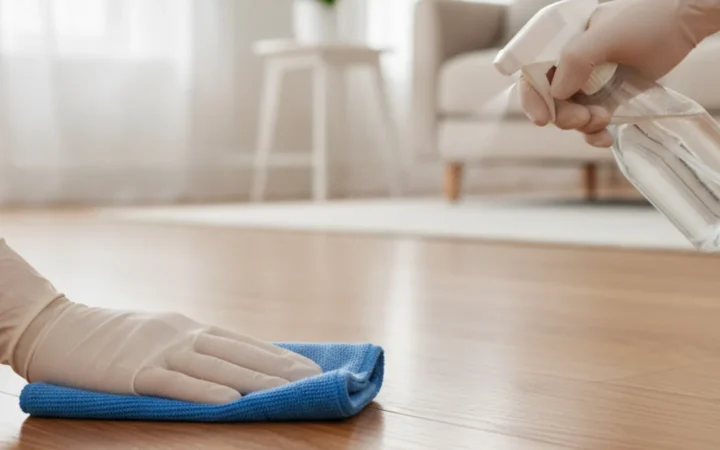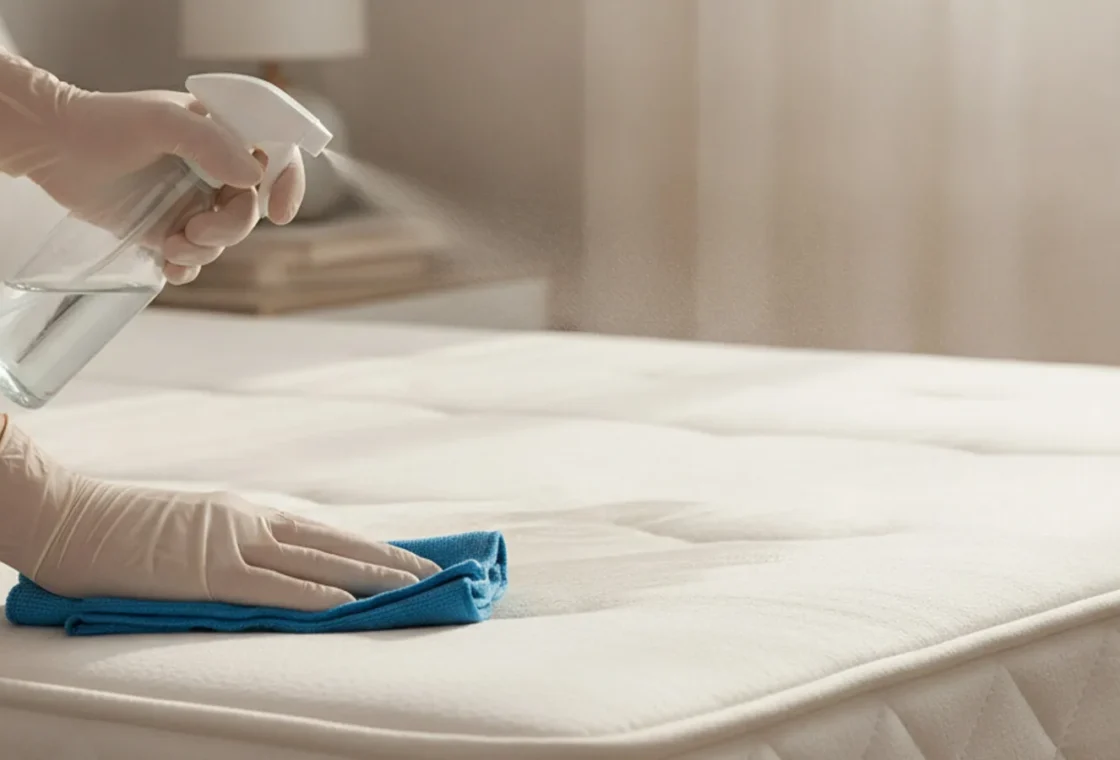
To clean a mattress, strip and wash the bedding, then vacuum the surface. Spot-treat stains by type, deodorize with baking soda, and let everything dry fully before remaking the bed. The key is to blot moisture rather than soak the mattress.
- Always blot moisture rather than soaking the mattress to prevent damage.
- Gather all supplies before starting so wet stains don't sit untreated.
- Vacuuming before cleaning lifts loose debris that would otherwise turn to mud.
- Different stains require specific treatments; using the wrong one can set a stain.
- Baking soda is effective for absorbing odors and residual moisture.
- Ensure the mattress is completely dry to prevent mold and mildew.
Strip Bedding
Wash sheets and protector in hot water.
Vacuum Surface
Use upholstery and crevice tools to remove debris.
Spot-Treat Stains
Apply specific solutions to stains with a cloth.
Deodorize with Baking Soda
Sift baking soda over the mattress and let it sit.
Vacuum Baking Soda
Remove all powder from the mattress surface.
Dry Completely
Air out the mattress until no dampness remains.
Learning how to clean a mattress comes down to five moves done in the right order: strip and hot-wash the bedding, vacuum the whole surface, spot-treat each stain by type, deodorize with baking soda, and let everything dry fully before the sheets go back on. The single rule that protects your mattress through all of it is to lift and blot moisture rather than soak the foam or coils underneath. Plan on about an hour of active work plus a few hours of drying time, ideally on a dry, breezy day.
Always check your mattress manufacturer's care label before using any cleaning solutions, as some warranties restrict certain liquids.
This guide walks through the full process, from the exact stain treatments for urine, blood, and sweat to how often the job actually needs doing. Treat the chemical recipes below as starting points and always check your manufacturer’s care label first, since some warranties restrict hydrogen peroxide and other liquids.
What do you need to clean a mattress?
Gather everything before you start so a wet stain is not sitting while you hunt for supplies. None of this is specialized; most of it is already in a typical US household or available at any drugstore.
- Vacuum with an upholstery attachment and a crevice tool for seams
- Baking soda (sodium bicarbonate) — a full box for a deodorizing pass, or about half a cup per stain
- 3% hydrogen peroxide, the standard drugstore concentration
- Clear or mild dish soap (dye-free is safest on light fabric)
- An enzyme cleaner for biological stains — pet-stain formulas such as Nature’s Miracle or Urine Off are built for this
- Several clean microfiber cloths and a few white rags you don’t mind staining
- A spray bottle for mixing solutions
- Cold water (critical for blood — never hot)
- White distilled vinegar as a lower-cost alternative to peroxide
- Rubber gloves, a fan or open window, and your sheets ready for a hot wash
Skip colored dish soaps, bleach, and any “stronger is better” instinct. The goal is the least liquid that lifts the mess, because excess moisture is what damages a mattress.
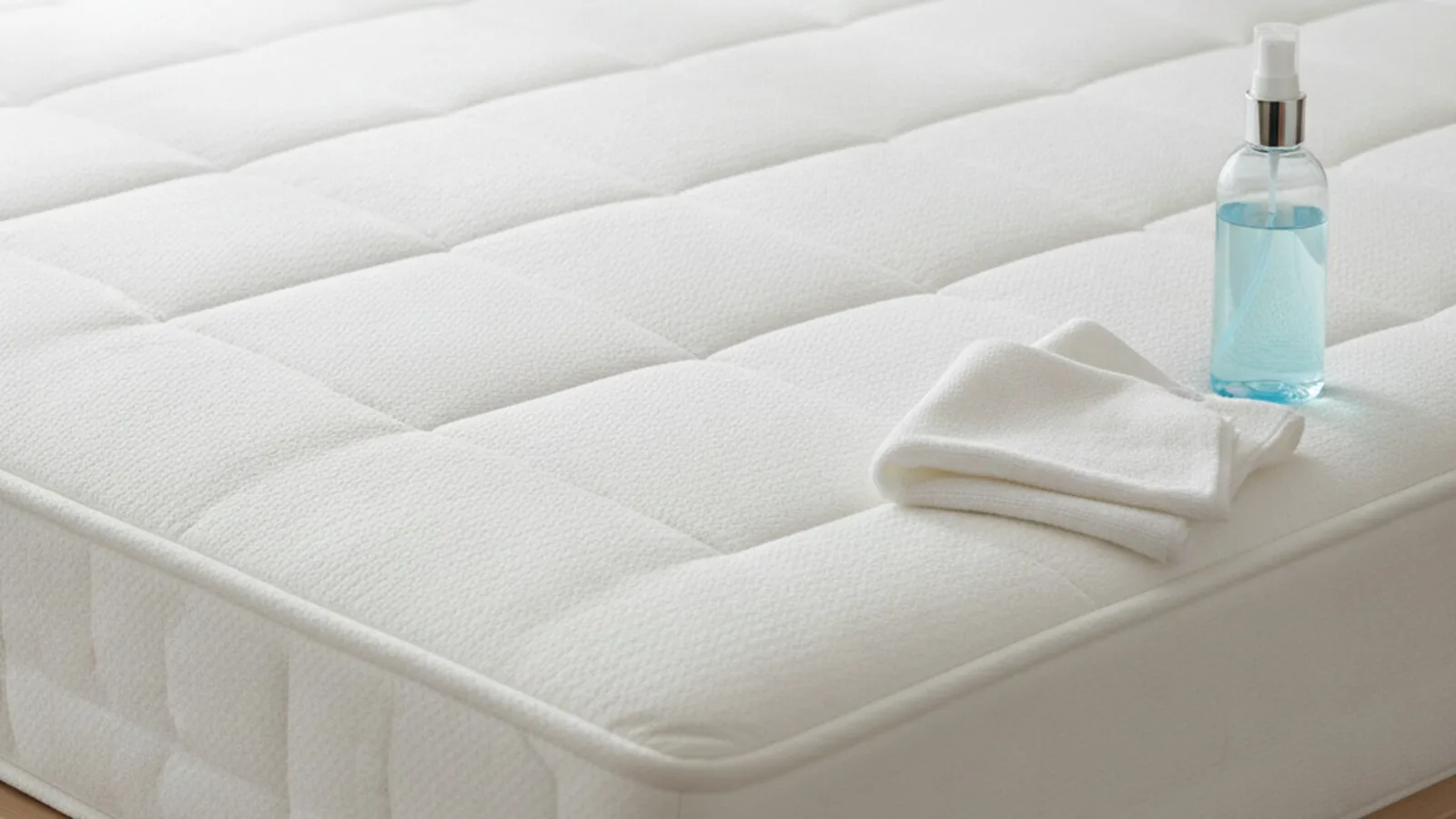
How do you clean a mattress step by step?
This is the core routine. Work in order: cleaning before you vacuum just pushes grime around, and applying baking soda before you treat a wet stain wastes the stain window. Here is how to clean a mattress from start to finish.
- Strip the bed and wash the bedding hot. Pull off sheets, pillowcases, and the mattress protector and run them through the hottest wash their care labels allow. Hot water helps kill dust mites, which feed on shed skin cells. Start this load first so it runs while you work.
- Vacuum the entire surface. Fit the upholstery attachment and move in slow, overlapping passes across the top, then switch to the crevice tool for the seams, piping, and side panels where dust and dead skin collect. Vacuuming lifts the loose debris that would otherwise turn to mud the moment it meets a cleaning spray.
- Spot-treat the stains, one type at a time. Handle visible marks before deodorizing (see the stain table below for the right treatment per type). Spray the solution onto a cloth rather than directly onto the mattress, dab the stain from the outside inward, and blot with a dry cloth. Always spot-test any peroxide mix on a hidden corner first, because it can lighten fabric.
- Deodorize with baking soda. Sift a generous, even layer of baking soda over the whole mattress (or concentrate it on a lingering odor). This is the step that pulls out trapped smells and residual moisture.
- Let the baking soda sit. Give it a minimum of about 30 minutes; a few hours is better, and overnight is best if you can sleep elsewhere. The longer it sits, the more odor and moisture it absorbs. Opening a window or running a fan during this time speeds things along.
- Vacuum the baking soda off. Go back over the whole surface with the upholstery attachment until no powder remains, including in the seams where it settles.
- Flip or rotate, then repeat if needed. If your mattress is double-sided, flip it and repeat steps 2 through 6. Most modern pillow-top and memory-foam mattresses are one-sided and should only be rotated head-to-foot, not flipped.
- Dry it completely. Let the mattress air out until there is no trace of dampness anywhere before you remake the bed. Trapped moisture is what breeds mold and mildew inside the layers.
How do you remove stains from a mattress by type?
Different messes need different chemistry, and using the wrong one can set a stain permanently. Knowing how to remove stains from a mattress starts with identifying what you are dealing with, because the treatment that dissolves a protein stain is not the one that lifts a sugary spill. The table below is a quick reference; the key cautions follow.
| Stain type | Recommended treatment |
|---|---|
| Urine (human or pet) | Blot wet, then an enzyme cleaner; follow with baking soda to absorb odor. Enzyme formulas break down the uric acid crystals plain cleaners leave behind. |
| Blood (fresh) | Cold water only, blotted (never rubbed). Hot water sets the proteins. |
| Blood (dried) | A 1:1 mix of 3% hydrogen peroxide and cold water with a few drops of clear dish soap; apply sparingly, wait 10–15 minutes, then blot. |
| Sweat / body-oil yellowing | A baking-soda-and-water paste, or a peroxide + baking soda + dish soap mix. An oxygen-based powder works if you want to avoid peroxide. |
| General biological / unknown | Enzyme cleaner is the safest first try; peroxide mix as a backup after spot-testing. |
| Food, drink, and other spills | Blot up liquid first, then a little mild dish soap in water on a cloth; blot clean with plain water. |
A popular all-purpose homemade stain remover combines roughly 8 ounces of 3% hydrogen peroxide, about 3 tablespoons of baking soda, and a few drops of dish soap in a spray bottle. It works on a range of biological stains, but note two things: the baking soda can clog a sprayer, so some people stir it in a bowl instead, and peroxide can bleach darker fabrics. Spot-test every time. For fresh blood, resist the urge to reach for warm water; cold keeps the proteins from clumping and setting, and fresh blood lifts far more easily than dried.
How do you clean urine from a mattress and kill the odor?
Urine is the hardest common stain because the smell comes from uric acid crystals that ordinary soap does not dissolve. Whether it is a potty-training accident or a pet, the method for how to clean urine from a mattress is the same, and enzymes do the real work.
- Blot up everything you can. Press a dry towel into fresh urine to pull out as much liquid as possible. Do not scrub, which drives it deeper.
- Apply an enzyme cleaner. Saturate the stained area per the product’s directions — enzyme cleaners such as Nature’s Miracle or Urine Off are specifically formulated to break down the uric acid that causes lingering smell. Give it the full dwell time listed on the label; this is not a step to rush.
- Blot again and let it work. After the dwell time, blot the area and let it air-dry. Enzymes keep working as they dry.
- Finish with baking soda. Once the spot is nearly dry, sprinkle about half a cup of baking soda over it to draw out any remaining moisture and odor. Leave it for several hours, then vacuum.
Set-in or repeat stains often need more than one round — results are genuinely mixed on old urine, so expect to repeat the enzyme-and-baking-soda cycle. For a general musty or stale smell rather than a specific accident, a plain baking soda pass across the whole mattress, left for several hours and vacuumed off, is usually enough. Sources differ on whether to deodorize before or after the enzyme step; the reliable constant is that the enzyme cleaner does the stain-and-smell work and baking soda finishes the job.
How to Treat Common Mattress Stains
This table outlines the recommended treatment for various types of mattress stains.
| Stain Type | Key Ingredient | Application Method | Drying Time |
|---|---|---|---|
| Urine (human or pet) | Enzyme cleaner | Spray onto cloth, dab stain | Several hours |
| Blood (fresh) | Cold water | Blot with cloth | Minutes |
| Blood (dried) | Hydrogen peroxide (3%) | 1:1 mix with cold water, dab | Minutes |
| Sweat | Dish soap | Few drops with cold water, dab | Minutes |
How do you clean a mattress with baking soda?
Baking soda is the workhorse of mattress care because it is a dry deodorizer — it absorbs odor and moisture without soaking anything. Here is how to clean a mattress with baking soda as a standalone refresh between deep cleans:
- Strip the bed and give the mattress a thorough vacuum first.
- Sift an even layer of baking soda across the entire surface. For a targeted odor, pile it a little thicker on that area.
- Let it sit. Thirty minutes is the floor; a few hours is better, and overnight gives the deepest result. Crack a window if you can.
- Vacuum it all back up with the upholstery attachment, working the seams so no gritty residue is left behind.
Some people mix a few drops of essential oil into the baking soda for scent, but that is optional and purely cosmetic. Baking soda alone will not remove a set-in stain — that is what the stain-specific treatments above are for — but it is the best low-effort way to keep a mattress smelling fresh.
What mistakes should you avoid when cleaning a mattress?
Most ruined mattresses are ruined by over-enthusiasm, not neglect. These are the errors worth knowing before you start.
- Never soak the mattress. This is the big one. Mattress interiors — foam, batting, coils — cannot dry out properly once saturated, and trapped moisture leads to mold, mildew, and odor you cannot reach. Always spray onto a cloth and blot; never pour liquid on.
- Don’t use hot water on blood. Heat cooks the proteins and locks the stain in. Cold water, always.
- Don’t skip the spot-test. Hydrogen peroxide and even some enzyme products can lighten or discolor fabric. Test a hidden corner and wait before committing.
- Don’t remake the bed while it’s damp. Putting sheets over a mattress that is even slightly wet traps the moisture you just tried to remove.
- Don’t machine-wash a solid foam topper or use a dryer on foam. It can break the material down, and some foams are flammable under direct heat.
- Don’t reach for bleach or ammonia. They are harsh on mattress fabrics, and ammonia near a urine stain can actually intensify the smell.
- Don’t ignore the care label. Some manufacturers restrict peroxide and liquid cleaners, and ignoring that can void a warranty.
How do you clean a mattress topper?
A topper follows different rules than the mattress under it, so it is worth treating separately. The first question in how to clean a mattress topper is always the material: a removable cover and a solid foam slab are not cleaned the same way.
- Removable cover: Most zip-off cotton covers can go in the washing machine at the temperature their care label specifies, then air-dry.
- Solid memory foam or latex: Never put it in the washing machine and never tumble-dry it. Spot-clean only, with a cloth dampened in mild detergent or a light baking-soda or vinegar solution, using as little moisture as possible. Cleaning products used heavily can discolor foam, so go sparingly.
- Deodorizing: The same baking soda pass works — sprinkle, wait, vacuum.
- Drying: Air-dry only, and make sure it is 100% dry before it goes back on the bed. Airing a topper outside on a dry day every few months helps with dust mites and body-oil buildup.
How often should you clean a mattress?
Cleaning on a schedule keeps the big jobs small. These intervals come from mattress makers and cleaning guides, so treat them as sensible defaults rather than hard rules — heavy sweating, pets, allergies, or spills all push the frequency up.
- Deep clean a mattress: about every six months (roughly twice a year). This is the full vacuum-treat-deodorize routine above. Deep clean a mattress more often if you have pets or allergies.
- Sheets and pillowcases: weekly for most people; every few days if a pet shares the bed.
- Mattress protector: estimates vary from every 1–2 months to every 3 months — wash it more often with heavy sweating or spills.
- Pillows: roughly every 3–6 months to clear absorbed oils and dust mites.
- Spills and accidents: treat immediately, on any schedule. A fresh stain is far easier to lift than a set one.
The best way to make all of this rare is a waterproof mattress protector. It is a washable barrier against sweat, spills, allergens, and dust mites, and it is the one piece of mattress care with the highest payoff for the lowest effort — some manufacturers even require one to keep the warranty valid. Rotating the mattress head-to-foot every few months also evens out wear. Just remember a protector absorbs everything it blocks, so it needs its own regular wash to avoid becoming the problem it was meant to prevent.
For best results, allow baking soda to sit on the mattress overnight to absorb maximum odor and moisture.
Your quick mattress-cleaning checklist
Run through this list each time and the job stays simple:
- Strip the bed; start the bedding on a hot wash
- Vacuum the whole surface, including seams and sides
- Identify each stain and match it to the right treatment
- Spray solution onto a cloth, blot — never soak
- Spot-test any peroxide mix on a hidden corner first
- Use cold water on blood; enzyme cleaner on urine
- Sift baking soda over everything; wait 30 minutes to overnight
- Vacuum the baking soda off completely
- Rotate (or flip, if double-sided)
- Let it dry fully — no sheets until it’s dry
- Reinstall a clean, dry waterproof protector
- Deep clean again in about six months
Done in order and without over-wetting, cleaning a mattress is a straightforward afternoon job that pays off in fewer allergens, no lingering odors, and a surface that lasts closer to its full lifespan. When in doubt about a chemical or method, the care label and a hidden spot-test are always the deciding vote.
What works well
- Removes odors
- Lifts stains
- Kills dust mites
- Prevents mold
Watch out for
- Requires drying time
- Needs specific tools
- May void warranty
- Can lighten fabric
Frequently Asked Questions
How do you clean a mattress with baking soda?
Vacuum the mattress first, then sift an even layer of baking soda over the whole surface. Let it sit at least 30 minutes, ideally a few hours or overnight, so it can absorb odor and moisture, then vacuum it all off, working the seams. It deodorizes but won't remove set-in stains.
How do you clean urine from a mattress?
Blot up as much liquid as possible, then apply an enzyme cleaner (such as Nature's Miracle or Urine Off), which breaks down the uric acid crystals that cause the smell. Give it the full dwell time, blot, let it air-dry, then finish with baking soda. Old stains often need several rounds.
How do you remove blood stains from a mattress?
Use cold water only on fresh blood, blotting rather than rubbing, because hot water sets the proteins. For dried blood, dab on a 1:1 mix of 3% hydrogen peroxide and cold water with a few drops of clear dish soap, wait 10 to 15 minutes, then blot. Spot-test first, since peroxide can lighten fabric.
How often should you clean a mattress?
Deep clean a mattress about every six months, more often with pets or allergies. Wash sheets weekly, a mattress protector roughly every 1 to 3 months, and pillows every 3 to 6 months. Treat any spill or accident immediately, regardless of schedule.
Can you machine wash a mattress topper?
Only the removable cover, at the temperature on its care label. A solid memory foam or latex topper should never go in the washing machine or dryer; spot-clean it with minimal moisture and air-dry it completely before use, since trapped moisture breeds mold and heat can damage the foam.