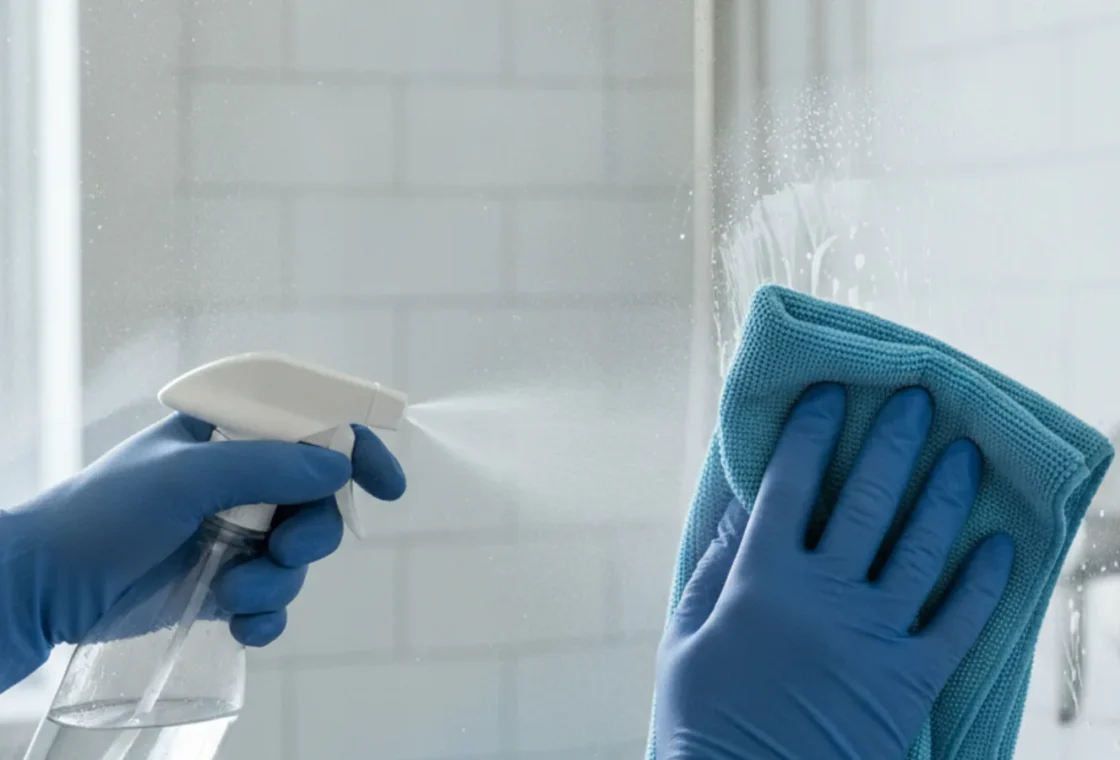
To clean shower glass and remove hard water, spray on warm white vinegar with a little dish soap for soap scum, then use a baking-soda paste on stubborn film and a stronger vinegar soak or limescale remover for mineral spots. Dry the glass and squeegee after every shower to stop buildup.
- Understand whether you are fighting soap scum (greasy, alkaline) or hard water (mineral, alkaline) to choose the right cleaner.
- A warm white vinegar and dish soap spray is effective for everyday soap scum and light mineral spots.
- Baking soda paste works well for more stubborn soap scum that the spray doesn't fully remove.
- Always dry the glass immediately after cleaning to prevent new streaks and water spots.
- Using a squeegee after every shower is the best way to prevent future buildup of both soap scum and hard water.
Rinse glass with warm water
Wash away loose grit to prevent scratches.
Warm the vinegar
Heat distilled white vinegar until warm.
Mix the spray
Combine warm vinegar and dish soap in a spray bottle.
Spray and soak
Coat glass thoroughly and let it dwell for 15 to 30 minutes.
Scrub gently
Work the glass with a non-abrasive sponge or microfiber cloth.
Rinse and dry
Flush away all residue and wipe the pane dry immediately.
Learning how to clean shower glass comes down to understanding two separate problems that sit on the same pane: a greasy, cloudy film of soap scum, and the chalky white dots of hard water. They look similar when the glass is dirty, but they are chemically opposite, so one spray almost never fixes both. The fastest, most reliable routine uses a warmed white vinegar and dish soap spray for the everyday film, a baking soda paste for stubborn scum, and a stronger vinegar soak or a dedicated limescale remover for the mineral spots. Finish by drying the glass, then keep it clear with a squeegee after every shower. This guide walks through each method, the order to use them in, the mistakes that scratch or etch glass permanently, and how to prevent the buildup from coming back.
Never use abrasive scouring pads or steel wool on shower glass, as they can cause permanent scratches.
What causes the buildup on shower glass?
Before you reach for a cleaner, it helps to know what you are actually dissolving, because the right product depends on it.
Soap scum is the dull, waxy film that smears when you drag a finger across it. It forms when the fatty acids in bar soap react with minerals in the water and combine with body oils and skin cells. Because this residue is largely greasy and alkaline-leaning, it responds well to a mild acid like vinegar and to the grease-cutting surfactants in dish soap. Switching from bar soap to a liquid body wash or a syndet (synthetic detergent) bar noticeably reduces how fast scum returns.
Hard water stains, also called limescale or water spots, are the opposite. They are mineral deposits left behind when droplets evaporate and leave their dissolved calcium and magnesium on the glass. These deposits are alkaline, which is exactly why an acid is needed to break them down. Tap water used for rinsing can leave fresh spots of its own, so distilled water is the better choice when you want a spotless finish.
Knowing which problem you are facing tells you whether to start with a soap-scum method or a hard-water method. Most showers have both, and the sections below handle each in turn.
What do you need to clean shower glass?
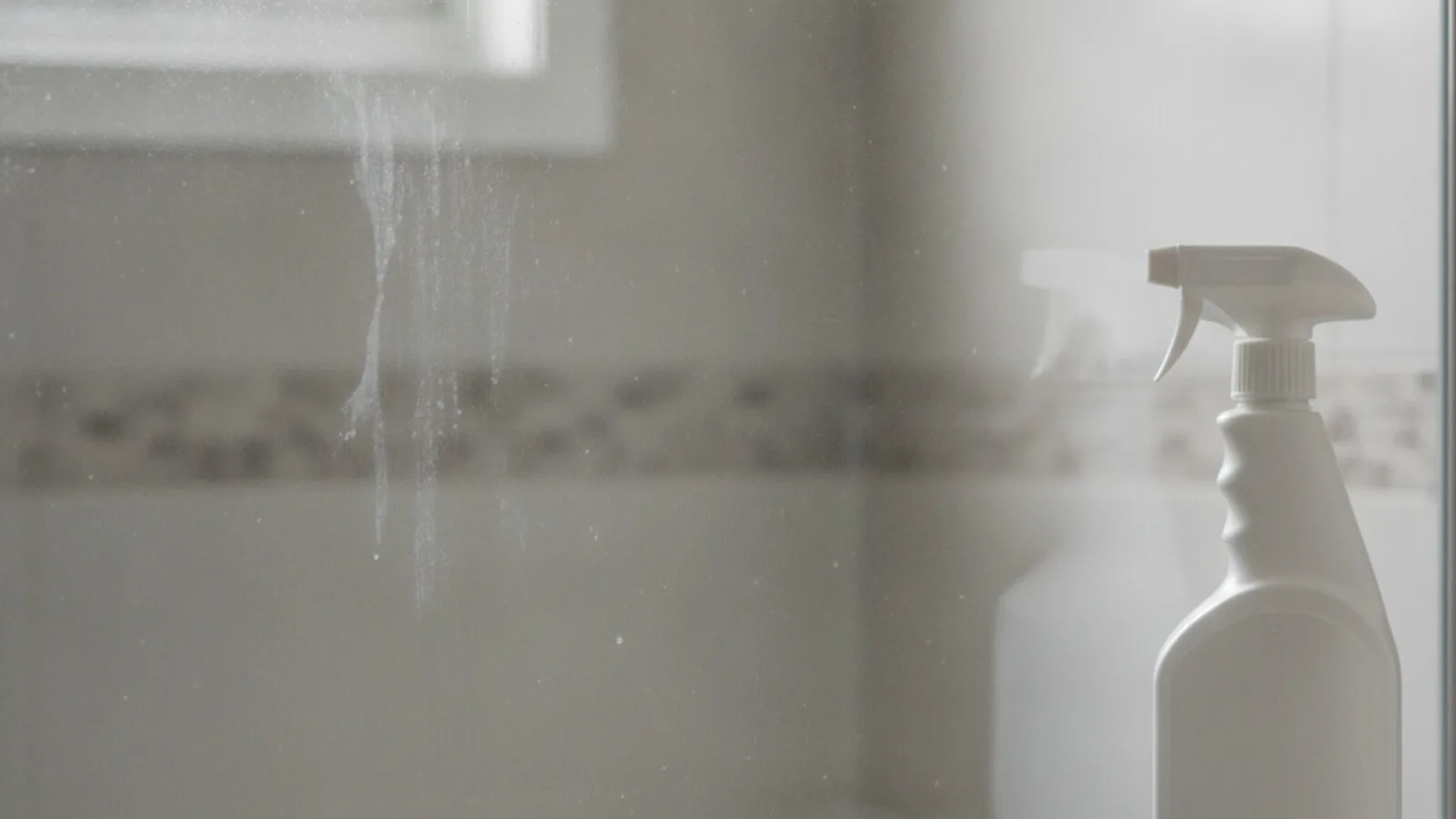
You do not need a cabinet full of specialist products. A short, deliberate kit handles nearly every situation:
- White vinegar (distilled, roughly 5 percent acidity) for cutting soap film and dissolving light mineral spots.
- Liquid dish soap such as Dawn, for its grease-cutting surfactants.
- Baking soda (sodium bicarbonate) to make a mild paste for stubborn scum.
- Distilled water for mixing sprays and for a spot-free final rinse.
- A spray bottle you can label and reuse.
- Microfiber cloths (at least two: one to scrub, one to dry).
- A non-abrasive sponge or a soft nylon-free pad.
- A rubber or silicone squeegee for daily prevention and for a streak-free finish.
- Paper towels for the vinegar-soak method on vertical glass.
- Rubber gloves and decent ventilation, especially if you later use a commercial limescale remover.
Optional extras include a dedicated limescale remover (such as CLR or Lime-A-Way) for deposits vinegar will not shift, and a shower-glass water repellent like Rain-X for glass surfaces if you want to extend the time between deep cleans. One tool that is not on this list, and never should be, is steel wool or any abrasive scouring pad. More on why under the mistakes section.
How do you clean shower glass with vinegar?
This is the everyday workhorse method, and it is the first thing to try on a pane that is filmy rather than crusted. Warming the vinegar makes it noticeably more effective at loosening soap scum, because heat speeds up the reaction.
- Rinse the glass with warm water first. This washes away loose grit so you are not grinding it into the surface while you scrub. It is a small step that prevents fine scratches.
- Warm the vinegar. Heat about one cup of distilled white vinegar until it is warm but not boiling. A few seconds in a microwave-safe container is enough.
- Mix the spray. Combine the warm vinegar with one to two tablespoons of dish soap in a spray bottle and swirl gently to blend. A common alternative is equal parts vinegar and warm water with a few drops of dish soap. Both work; the stronger mix just acts faster on heavier film.
- Spray and soak. Coat the glass thoroughly and let it dwell for 15 to 30 minutes so the acid and surfactants have time to break the film down. Do not let it dry out; re-mist if it starts to.
- Scrub gently. Work the glass with a non-abrasive sponge or microfiber cloth, using circular motions on any clingy patches.
- Rinse completely. Flush away all residue with warm water.
- Dry immediately. Wipe the pane dry with a clean microfiber cloth, or pull a squeegee top to bottom. Drying is what prevents streaks and fresh water spots, so never skip it.
A note some sources raise: vinegar is acidic and dish soap is mildly alkaline, so in theory they can partly neutralize each other. In practice the combination still cleans well for routine film, which is why it remains the go-to recipe. If your glass is more mineral-crusted than greasy, lean on the straight-vinegar approach in the hard-water section instead.
How do you remove soap scum from glass?
When a vinegar spray alone leaves a hazy film behind, a baking soda paste gives you gentle mechanical lift without the scratching risk of a scouring pad. Baking soda is a very fine, water-soluble abrasive, which is why it works on scum that chemistry alone cannot budge.
- Make the paste. Stir baking soda with a little water until it reaches a spreadable, toothpaste-like consistency. A starting ratio of about one part water to three parts baking soda works; adjust until it clings to vertical glass.
- Apply it. Spread the paste over the scummy areas with a soft sponge or cloth.
- Let it sit. Give it roughly 15 to 20 minutes to work on the film.
- Scrub lightly. Use a damp non-abrasive sponge in small circles. Let the paste do the work; you should not need heavy pressure.
- Rinse and dry. Flush thoroughly with warm water, then dry with microfiber or a squeegee so no gritty residue or spots are left.
Some people activate the paste with a spritz of vinegar, which fizzes dramatically. The fizz is satisfying but mostly cosmetic; much of each ingredient’s power is spent in the reaction. If you do combine them, spread the paste first and mist vinegar on afterward, and understand it is a deeper-clean move rather than a weekly habit.
Important caution: although baking soda is mild, glass professionals warn that repeated abrasive use can dull or etch glass over time, and it is explicitly off-limits on coated glass. Treat the paste as an occasional tool for a deep clean, not something you reach for every week, and keep it away from any treated surface.
How do you remove hard water stains from glass?
Hard water spots need an acid, and they need contact time. The trouble with vertical glass is that spray runs straight off, so the trick is to hold the acid against the mineral deposit long enough to dissolve it.
- Choose your strength. For light spotting, mix equal parts white vinegar and distilled water. For heavier limescale, use straight white vinegar with no water. Avoid mixing with tap water, which can leave spots of its own.
- Do the paper-towel soak. Soak paper towels (or a cloth) in warm vinegar and press them flat against the glass so they stay in contact instead of sliding off. This is the single most effective step for vertical panes.
- Wait. Leave the compress in place for 15 to 30 minutes. For thick deposits, re-wet it partway through so it never dries.
- Scrub the spots. Remove the towels and work the glass with a vinegar-dampened non-abrasive sponge. For stubborn individual spots, a baking soda paste can be dabbed on as a mild assist.
- Reach the tight corners. A toothbrush dipped in vinegar handles door edges, hinges, and the channel where glass meets metal or tile.
- Rinse and dry fully. Flush with warm water, finishing with distilled water if you want a truly spot-free result, then squeegee and dry.
When vinegar will not touch the deposit, step up to a dedicated limescale remover such as CLR or Lime-A-Way, following the label for dwell time and rinsing, with gloves on and the bathroom ventilated. One honest caveat worth knowing: if hard water has been left so long that it has begun to etch the glass, no cleaner fully reverses that. Etching is physical damage to the surface, not a film sitting on top of it, so the goal is to remove deposits before they reach that stage.
Cleaning Methods Compared
Choose the right cleaning method based on the type and severity of buildup on your shower glass.
| Problem | Appearance | Cause | Best Solution |
|---|---|---|---|
| Soap Scum | Dull, waxy film | Fatty acids in bar soap + minerals in water | Mild acid (vinegar) and grease-cutting soap |
| Hard Water Stains | Chalky white dots/spots | Evaporated water leaving calcium and magnesium | Stronger acid (vinegar or limescale remover) |
| Method | Best For | Key Ingredients | Time |
| Vinegar & Dish Soap Spray | Everyday soap scum, light hard water | White vinegar, dish soap | 15-30 minute soak |
| Baking Soda Paste | Stubborn soap scum | Baking soda, water | Apply and scrub |
| Stronger Vinegar Soak | Moderate hard water | White vinegar, paper towels | Longer soak time |
Which cleaning method should you use?
Matching the method to the problem saves time and protects the glass. This comparison lays out what each approach is best for.
| Method | Best for |
|---|---|
| Warm vinegar + dish soap spray | Everyday soap film and light grime; the standard weekly clean |
| Baking soda paste | Stubborn, clingy soap scum that resists a spray; occasional deep cleans only |
| Diluted vinegar (1:1 with distilled water) | Light to moderate hard water spots and mineral haze |
| Straight white vinegar, paper-towel soak | Heavy limescale and thick mineral deposits on vertical glass |
| Dedicated limescale remover (CLR, Lime-A-Way) | Mineral deposits vinegar cannot dissolve; use with ventilation and gloves |
| pH-neutral or coating-safe glass cleaner | Coated or treated glass (ShowerGuard, HydroClear, CleanCoat); routine care |
| Squeegee + microfiber dry | Daily prevention and a streak-free finish after any method |
A simple decision rule: if the glass feels greasy or smears, start with vinegar-and-soap and escalate to baking soda. If it feels gritty or shows white dots, start with a vinegar soak and escalate to a limescale remover. If the glass is coated, ignore the harsh options entirely and use the care section below.
How do you prevent water spots on shower glass?
Prevention is where the real time savings are. Every minute spent keeping the glass dry is several minutes you do not spend scrubbing later, because spots and scum only form on surfaces that stay wet.
Squeegee after every shower. This is the highest-value habit by a wide margin. Hard water spots form when droplets evaporate and leave minerals behind, so if you pull the water off before it dries, the minerals never get the chance to settle. A quick top-to-bottom pass with a squeegee takes under a minute. Keep the squeegee hanging inside the enclosure so it is effortless to grab.
Ventilate and wipe down. Run the exhaust fan or crack a window so the glass dries faster, and keep a microfiber cloth nearby for the edges a squeegee misses.
Apply a water repellent. A glass sealant such as Rain-X Shower Door, applied every few months to completely clean, dry glass, leaves an invisible hydrophobic layer so water beads up and rolls off instead of clinging. It does not replace cleaning, but it stretches the interval between deep cleans. Two cautions: apply it only after the glass is spotless, because it will seal in any residue underneath, and never use these automotive-style repellents on acrylic or plastic doors, where they can damage the surface. Always confirm your door material first.
Consider softening the water. If stains keep returning no matter how diligent you are, the root cause is your water’s mineral content. A water softener or even a showerhead filter reduces the calcium and magnesium reaching the glass, which attacks the problem at the source.
What mistakes should you avoid when cleaning shower glass?
The quickest way to ruin a shower enclosure is to clean it with the wrong tool or the wrong product. These are the errors that cause permanent damage rather than just a poor result.
- Do not use abrasive pads or powders. Steel wool, magic-eraser-style melamine blocks used hard, and scouring powders such as Comet or Ajax will scratch glass. Manufacturers of coated glass list these explicitly among things to avoid. Scratches are permanent and, unlike film, cannot be cleaned away.
- Do not scrub coated or treated glass with anything harsh. Treated panes like Guardian ShowerGuard, Cardinal HydroClear, Kohler CleanCoat, and AGC Luxclear carry a factory coating. These products are not self-cleaning or scratch-resistant despite the marketing shine, and their own care sheets forbid abrasive cleaners, razor blades, and often acidic products on the coated side. On coated glass, stick to a soft cloth or squeegee with water, or a pH-neutral cleaner the manufacturer approves. If you are unsure whether your glass is coated, treat it as if it is and check the care sheet.
- Do not skip the pre-rinse. Wiping dry, gritty glass drags loose mineral particles across the surface and can create fine scratches. A quick warm rinse first removes that grit.
- Do not let cleaner dry on the glass. Dried cleaner leaves its own streaks and, in the case of acids, prolonged contact can harm coatings. Keep surfaces wet during the dwell time and rinse thoroughly.
- Do not mix cleaning chemicals. Never combine vinegar or any acid with bleach, and do not blend commercial products. Mixing can release dangerous fumes. The baking soda and vinegar combination is safe but, as noted, largely spends itself in the fizz.
- Do not use a razor blade on coated glass. It is sometimes suggested for stubborn spots on plain glass, but on coated panes it strips the coating and on any glass it risks gouging. There are gentler options.
- Do not ignore the hardware and seals. Vinegar left sitting on metal frames, chrome, or rubber gaskets for long periods can dull or degrade them. Keep soaks on the glass and rinse metal promptly.
How often should you clean shower glass?
Frequency depends on how hard your water is and how many people use the shower, but a tiered routine keeps the glass permanently clear with minimal effort:
- Daily: Squeegee the glass after each shower. This one habit prevents most buildup before it starts.
- Weekly: Do the warm vinegar and dish soap spray, scrub lightly, rinse, and dry. Cleaning weekly stops soap scum and mineral spots from bonding into the stubborn layers that require aggressive methods.
- Monthly or as needed: Tackle any hard water spots with a vinegar soak, and use the baking soda paste only where scum has accumulated.
- Every few months: Reapply a water repellent to clean, dry glass if you use one, and give coated glass the gentle wipe-down its manufacturer recommends.
The pattern that works is consistency over intensity. A thirty-second daily squeegee and a quick weekly spray will keep glass clearer than an occasional, exhausting deep-clean marathon, and it spares the glass the harsh scrubbing that shortens its life.
Switching from bar soap to a liquid body wash or synthetic detergent bar can significantly reduce soap scum buildup.
Quick checklist for spotless shower glass
Keep this sequence in mind and the glass will stay clear with very little effort:
- Identify the problem first: greasy film means soap scum, white dots mean hard water.
- Pre-rinse with warm water to remove loose grit.
- For film, spray warm vinegar and dish soap, dwell 15 to 30 minutes, then wipe.
- For stubborn scum, apply a baking soda paste and scrub gently (never on coated glass).
- For mineral spots, press vinegar-soaked paper towels onto the glass and wait, then scrub.
- Escalate to a dedicated limescale remover only when vinegar fails, with gloves and ventilation.
- Rinse completely, ideally finishing with distilled water.
- Dry every time with microfiber or a squeegee to stop new spots forming.
- Squeegee after every shower as your core prevention habit.
- Apply a water repellent every few months to clean, dry glass, but never on acrylic.
- Avoid steel wool, scouring powders, razor blades, and harsh chemicals on coated glass.
- Check your glass for a factory coating and follow its care sheet if it has one.
Cleaning shower glass is less about elbow grease and more about matching the method to the mess, then keeping the surface dry so the mess has nothing to grip. Get the diagnosis right, use acids for minerals and surfactants for grease, protect any coating, and make the squeegee a reflex. Do that and the glass stays clear, streak-free, and genuinely low-maintenance for years.
What works well
- Cuts soap film
- dissolves light mineral spots
- everyday workhorse
Watch out for
- May not shift heavy deposits
- requires dwell time
Frequently Asked Questions
What is the best way to clean shower glass?
Match the method to the mess. For everyday soap film, spray warm white vinegar mixed with a little dish soap, let it dwell 15 to 30 minutes, scrub with a non-abrasive sponge, rinse, and dry. For hard water spots, press vinegar-soaked paper towels onto the glass so the acid stays in contact, then wipe. Always dry the glass afterward to stop new spots forming.
How do I remove hard water stains from shower glass?
Hard water stains are alkaline mineral deposits, so they need an acid. Use equal parts white vinegar and distilled water for light spotting, or straight vinegar for heavy limescale. Soak paper towels in warm vinegar, press them flat against the glass for 15 to 30 minutes, then scrub and rinse. If vinegar will not shift the deposit, step up to a dedicated limescale remover like CLR.
Can I use baking soda on shower glass?
Yes, as a mild paste for stubborn soap scum, but use it sparingly. Mix baking soda with a little water, spread it on, wait 15 to 20 minutes, then scrub gently with a damp non-abrasive sponge. Because baking soda is a fine abrasive, repeated use can dull glass over time, and it should never be used on coated or treated glass.
How do I prevent water spots on shower glass?
Squeegee the glass after every shower; this is the single most effective habit, because spots only form where water evaporates and leaves minerals behind. Ventilate the bathroom so glass dries faster, apply a water repellent such as Rain-X Shower Door every few months to clean dry glass (never on acrylic), and consider a water softener if stains keep returning.
What should I avoid when cleaning shower glass?
Avoid steel wool, scouring pads, and abrasive powders like Comet or Ajax, which scratch glass permanently. Never use harsh abrasives, razor blades, or strong acids on coated glass such as ShowerGuard, HydroClear, or CleanCoat, since the manufacturers forbid them. Always pre-rinse to remove grit, never let cleaner dry on the glass, and never mix vinegar with bleach.