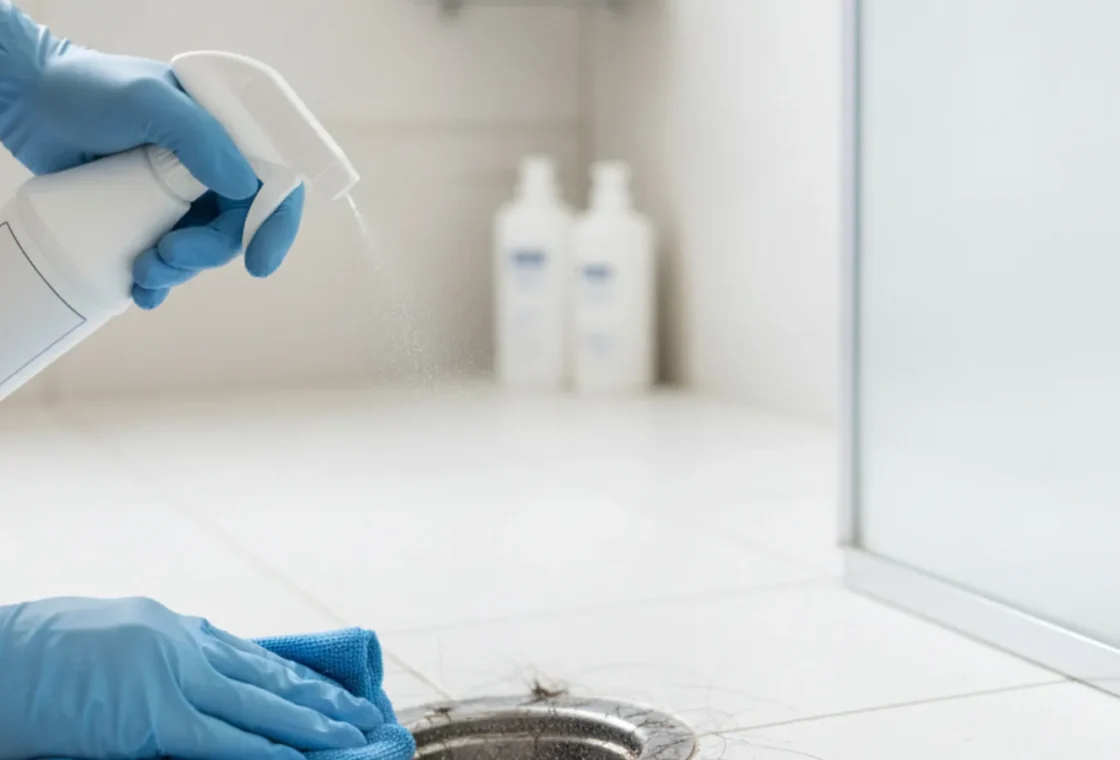
To clean a shower drain, remove the cover, pull out hair and gunk with a barbed strip or hooked wire, flush with hot water, and then treat with baking soda and vinegar to cut soap scum and biofilm. This method typically takes about 20 minutes and avoids harsh chemical cleaners.
- Physical removal of hair is the most effective way to clear a shower drain clog.
- Baking soda and vinegar effectively clean soap scum and biofilm from drain walls.
- A dry P-trap or biofilm are common causes of drain odors, and both are quickly fixable.
- If multiple fixtures are backing up, it's likely a main sewer line issue requiring a plumber.
- Regular maintenance can prevent clogs and smells, reducing the need for deep cleaning.
Remove drain cover
Unscrew or lift off the drain cover.
Clear visible gunk
Pull out hair and sludge by hand or hook.
Fish out hair clog
Push a barbed strip or hooked wire down the drain.
Flush with hot water
Pour very hot water down the drain.
Pour baking soda and vinegar
Add a cup of baking soda, then a cup of vinegar.
Let it sit
Cover the drain and wait 15 to 20 minutes.
Here is how to clean a shower drain: pop off the drain cover, pull out the hair clog with a Zip-It strip or a hooked wire, then flush with very hot water and finish with a baking soda and vinegar treatment to cut the soap scum and biofilm. For most slow or smelly drains, that sequence takes about 20 minutes and uses tools that cost a few dollars. Learning how to clean a shower drain this way also lets you skip the harsh chemical drain cleaners that plumbers repeatedly warn against.
Avoid using fully boiling water if you have PVC pipes, as it can damage them.
Below is the full method, step by step, plus a comparison of the main techniques, the mistakes that make things worse, how to kill the smell for good, and a maintenance routine that keeps the drain clear so you rarely have to do this again.
Why does a shower drain clog and smell in the first place?
Almost every shower drain problem traces back to the same culprits: hair, soap scum, body oils, and the slimy bacterial layer called biofilm that grows on all of it. Strands of hair snag on the crossbars of the drain and on each other, then soap residue and skin oils glue the mass together into a plug. That is why the single most effective thing you can do is physically remove the hair, not pour something on it.
Odor is a separate issue with its own causes. The most common sources, according to plumbing guides, are a dry P-trap letting sewer gas rise up through the pipe, and biofilm lining the drain walls feeding odor-causing bacteria. A clog can trap bacteria too. The good news is that the dry-trap and biofilm fixes are quick, and you can often tell them apart by a simple test described later in this guide.
A quick reality check before you start: if several fixtures back up at the same time, for example the shower, a sink, and a toilet all draining slowly, that usually points to a main sewer line blockage rather than a shower clog, and that is a job for a plumber. The methods here are for an isolated, slow, or smelly shower drain.
What do you need to clean a shower drain?
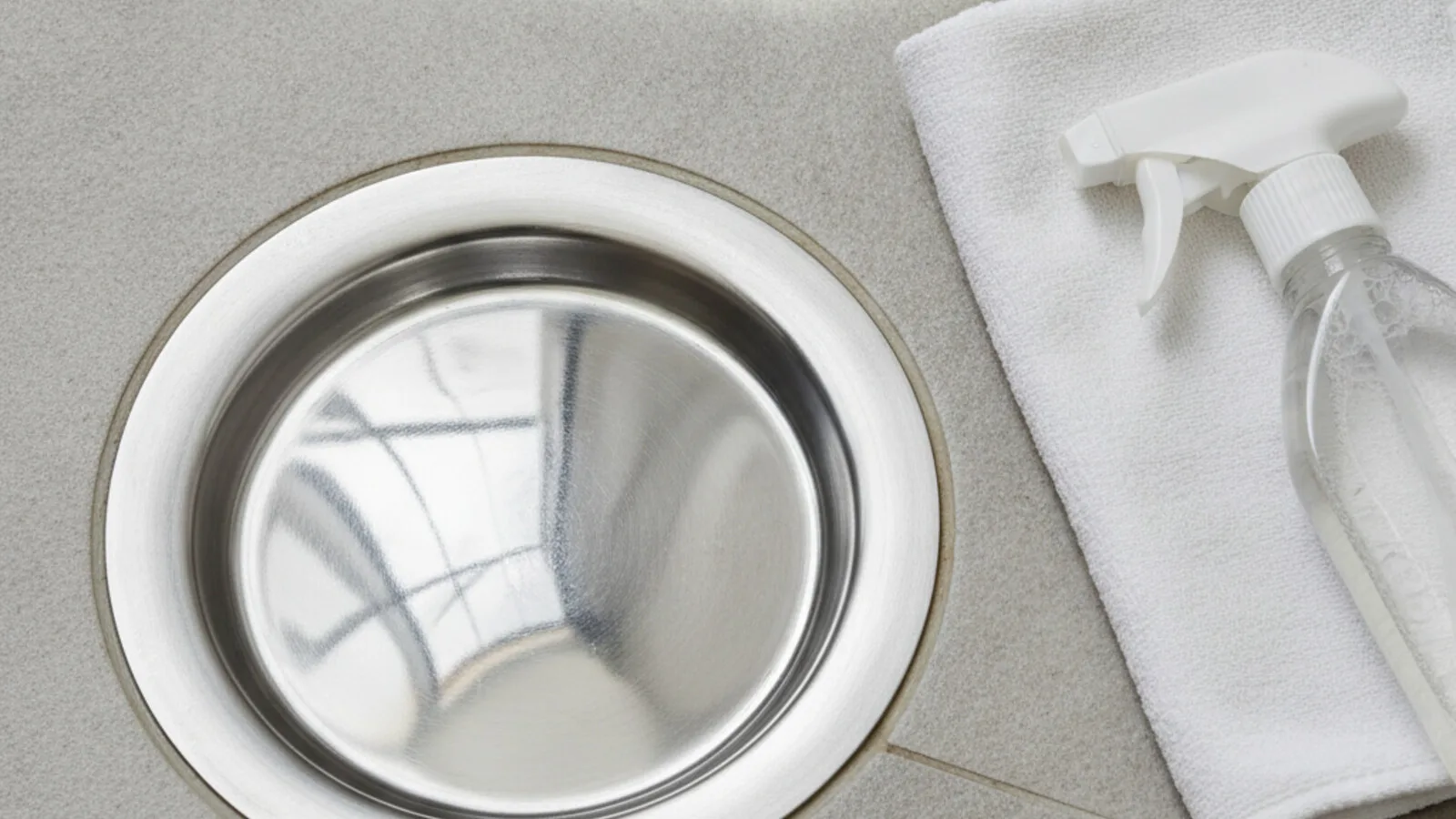
You do not need much, and most of it is inexpensive or already under your sink. Gather what you can from this list before you start so you are not running back and forth mid-job.
- A hair-removal tool. A plastic Zip-It drain strip has barbs along its length that catch hair and typically costs only a few dollars. A bent wire coat hanger with a small hook works as a free substitute.
- A screwdriver. Many drain covers are held by a single center screw; some just snap or lift off.
- Disposable gloves. What comes up is unpleasant, and barbed tools have sharp edges.
- Baking soda and white vinegar. Roughly a cup of each is plenty for one treatment.
- A kettle or pot for hot water. See the caution below on boiling water and pipe material.
- An old toothbrush or small bottle brush. For scrubbing biofilm off the cover and the top of the pipe.
- A flat cup plunger (optional). Not the flanged type used for toilets.
- A hand-crank drain snake or auger (optional). Only needed if the clog sits deeper than your hair tool can reach.
- A paper towel and trash bag. For the hair you pull out, which should go in the trash, never back down the drain.
How to clean a shower drain step by step
This is the core routine. Work through it in order; most drains are flowing freely again before you reach the snake.
- Remove the drain cover. Check how yours is held in place first. Some covers unscrew at a center screw, others snap off or lift out, and a few twist to release. Do not force it; if it resists, look for a hidden screw or a pry point rather than cranking on it. Set the cover and any screw somewhere they will not fall down the open drain.
- Clear the visible gunk. Put on gloves. You will usually see a wad of hair and grayish soap sludge right at the opening. Pull out what you can reach by hand or with the hook and drop it straight into the trash bag.
- Fish out the hair clog. Push the Zip-It strip or hooked wire straight down as far as it goes, then twist and wiggle so the barbs or hook grab the clog. Pull back slowly, because yanking tends to splash debris and can snap the strip. Wipe the tool on the paper towel and repeat. Keep going until the tool comes up clean two or three passes in a row.
- Flush with very hot water. Run the hot tap for a minute, or pour a kettle of hot water down the drain, to soften and rinse away loosened soap and oil. On pipe material, see the caution in the next section before using fully boiling water.
- Pour in baking soda, then vinegar. Tip about a cup of baking soda directly into the drain, then follow with about a cup of white vinegar. It will fizz. Cover the opening with the drain cover or a rag so the reaction works downward against the pipe walls instead of bubbling straight back up.
- Let it sit. Wait at least 15 to 20 minutes. For a drain that has been slow or smelly for a while, you can leave it longer, up to an hour. Note that this treatment is best thought of as a cleaner for soap scum and biofilm, not a reliable way to blast through a solid clog, which is why the hair removal in step 3 matters most.
- Do the final hot flush. Run hot water again for a minute or two to carry away everything the treatment loosened. Watch how fast it drains. If it is flowing normally, you are done.
- If it is still slow, plunge. Add enough water to cover the drain opening, seal a flat cup plunger over it, and pump firmly a dozen times. Plunging can dislodge a clog sitting just out of reach or loosen one before you snake it.
- If it is still blocked, snake it. Feed a hand-crank drain snake into the pipe until you meet resistance, turn the handle to let the tip grab or break up the clog, then draw it back out slowly and remove the debris. A drain snake is the right tool once a blockage sits several inches or more down the pipe, beyond what a hair strip reaches.
- Reinstall the cover. Rinse the cover, scrub off any film with the old toothbrush, and screw or snap it back into place. Run the water one last time to confirm the drain is clear and, if a trap was dry, to refill it.
Which method should you use: a quick comparison
Different problems call for different tools. Use this table to match the situation to the method, then follow the steps above for whichever one fits. Effort ratings are relative and assume a standard residential shower drain.
| Method | Best for | Effort |
|---|---|---|
| Zip-It strip or hooked wire | The most common problem: a hair-and-soap clog near the opening | Low, about 5 minutes, no disassembly beyond the cover |
| Hot water flush | Softening and rinsing greasy soap and shampoo residue | Very low, a few minutes |
| Baking soda and vinegar | Routine cleaning, light buildup, and odor between deep cleans | Low, but needs a 15 to 60 minute wait |
| Enzyme drain cleaner | Dissolving organic biofilm and residue over time; maintenance, not emergencies | Low effort but slow, often an overnight soak |
| Flat cup plunger | A clog just out of reach of a hair tool | Moderate, a few minutes of pumping |
| Hand-crank drain snake | A stubborn clog lodged deeper down the pipe | Moderate to high, more cleanup involved |
| Chemical drain cleaner | Generally discouraged for routine use (see cautions below) | Low effort, but carries real risks |
Main Clog-Clearing Methods
This table compares common methods for clearing a shower drain clog.
| Method | Effectiveness | Time | Cost |
|---|---|---|---|
| Hair removal tool | High for hair clogs | 10-15 minutes | ~$5 |
| Baking soda + vinegar | High for soap scum/biofilm | 15-60 minutes | ~$2 |
| Plunger | Moderate for minor clogs | 5-10 minutes | ~$10-20 |
| Hand-crank snake | High for deeper clogs | 20-30 minutes | ~$20-50 |
What are the mistakes to avoid?
A few common moves either make the clog worse or damage the plumbing. These are the ones worth knowing before you reach for the wrong product.
Reaching for chemical drain cleaner first. This is the big one. Plumbing professionals widely advise against routine use of caustic or acidic liquid drain cleaners, and the reasoning is consistent. The chemical reaction inside the pipe generates heat that can soften PVC and corrode older metal lines; cast iron and galvanized pipes are especially vulnerable, thinning over time until they are prone to leaks. If the cleaner cannot reach the clog, it can pool and sit against the pipe wall, doing damage without clearing anything. On a septic system the problem is worse, because the chemicals can kill the bacteria the system relies on. There are also personal-safety hazards: these products can burn skin and eyes, and residue left in the pipe can splash back during later plunging or react with other cleaners you use afterward. Save them, at most, as a rare last resort, not a first move.
Pouring boiling water down the wrong pipes. Very hot water is great for softening soap and grease, but several guides caution about using fully boiling water carelessly on PVC piping. If you are unsure of your pipe material, use hot tap water or let a kettle cool slightly rather than tipping a rolling boil straight down.
Mixing products. Never layer a chemical drain cleaner on top of a baking-soda-and-vinegar treatment, or chase an enzyme product with bleach. In particular, following an enzyme cleaner with bleach or another harsh chemical kills the very bacteria doing the work, and mixing unknown residues can create fumes.
Expecting fizz to do the heavy lifting. The baking soda and vinegar reaction is useful for cleaning and odor, but the evidence that it reliably clears a fully blocked drain is thin, mostly anecdotal. Treat it as a cleaner, not a clog-buster, and always pull the hair out mechanically first.
Rinsing the hair back down. It is tempting to let the clump wash away, but that just reforms the clog farther along. Bag it and bin it.
How do you fix a smelly shower drain?
A smell that lingers even when the drain flows fine is almost always one of two things, and a simple test tells them apart. If the odor fades after you run water for a while and returns only when the shower sits unused, you are probably dealing with a dry P-trap. If it comes back within a day or two of cleaning, biofilm or a venting issue is the more likely cause.
For a dry P-trap, the fix is to restore the water seal that blocks sewer gas: simply run the shower for a minute or two to refill the trap. For a drain that goes unused for long stretches, such as a guest bathroom, pouring a little mineral oil down it slows the water from evaporating so the seal lasts longer.
For biofilm, which tends to smell musty rather than like raw sewage, mechanical scrubbing is what works. Remove the cover and scrub the inside of the drain and the top of the pipe with an old toothbrush or bottle brush to break up the slimy layer, then flush with hot water. A monthly baking soda and vinegar treatment helps disrupt fresh biofilm between deep cleans. If the smell is a strong sewage odor that persists after you have refilled the trap and scrubbed, the cause may be a leak or a vent problem behind the wall, and that is worth a call to a plumber.
Can you clean a shower drain naturally without chemicals?
Yes, and for routine maintenance the natural route is the better default. Mechanical hair removal plus hot water plus the baking soda and vinegar treatment handles the large majority of slow and smelly drains without any caustic product at all. The method is cheap, low-risk, and reasonable for the organic clogs, hair and soap scum, that cause most shower problems.
For a gentler ongoing option, enzyme drain cleaners use live bacteria or enzymes to digest organic matter such as body oils, soap residue, and the biofilm itself. They are marketed as pH-neutral and non-corrosive, which makes them easier on pipes than caustic cleaners. The trade-off is speed: enzymes are slow, often needing an overnight soak, and they struggle against a solid ball of hair, so pull the hair out first and use enzymes for upkeep rather than emergencies. Because the independent testing on specific products is limited, check the label and safety data sheet for septic and pipe-compatibility claims, and ventilate the bathroom if a product has strong fumes.
How do you keep a shower drain clear going forward?
Maintenance is almost entirely about keeping hair out of the pipe in the first place, because hair is the scaffold everything else clings to. A little routine prevents the big, unpleasant jobs.
- Install a hair catcher. A simple screen or strainer that sits over or inside the drain opening catches hair before it enters the pipe. This one habit prevents most clogs.
- Empty the catcher often. Clear it after most showers or at least weekly, and put the hair in the trash.
- Flush weekly with hot water. A minute of hot water down the drain helps keep soap and oil from congealing.
- Do a monthly baking soda and vinegar treatment. This disrupts biofilm and keeps odors from establishing between deep cleans.
- Scrub the cover and drain opening regularly. A quick pass with an old toothbrush stops biofilm from building into a smell.
- Pull hair early. At the first sign of slowing, run the Zip-It strip through rather than waiting for a full blockage.
- Keep lightly used traps wet. Run water in rarely used showers periodically, or add mineral oil, to stop the P-trap from drying out.
Always dispose of pulled-out hair in the trash, never back down the drain.
Your shower drain cleaning checklist
Run through this quick list to confirm you have covered the whole job, from clog to odor to prevention.
- Removed and set aside the drain cover without forcing it
- Pulled out the hair clog with a Zip-It strip or hook until the tool came up clean
- Flushed with hot water, mindful of the pipe material before using boiling water
- Ran a baking soda and vinegar treatment and let it sit at least 15 to 20 minutes
- Did a final hot flush and confirmed the drain is flowing normally
- Plunged with a flat cup plunger, or snaked the pipe, only if the clog persisted
- Refilled a dry P-trap and scrubbed off biofilm if there was a smell
- Avoided caustic chemical drain cleaners and did not mix products
- Installed or cleaned a hair catcher to prevent the next clog
- Scheduled a monthly natural treatment and planned to call a plumber if multiple fixtures back up or a sewage smell persists
Cleaned the right way, a shower drain is a 20-minute, few-dollars job you can do yourself: get the hair out, flush with heat, treat with baking soda and vinegar, and keep a catcher in place so it stays clear. Save the plumber, and the harsh chemicals, for the rare cases that genuinely need them.
What works well
- Inexpensive tools
- Avoids harsh chemicals
- Effective for hair clogs
Watch out for
- Unpleasant to remove gunk
- Not for main sewer line clogs
- Boiling water can damage PVC
Frequently Asked Questions
What is the fastest way to clean a shower drain?
Pop off the drain cover, pull the hair clog out with a Zip-It strip or hooked wire, then flush with hot water. For most slow drains that takes about five minutes and clears the thing clinging to everything else: the hair.
Does baking soda and vinegar actually unclog a shower drain?
It is best treated as a cleaner for soap scum and biofilm, not a reliable clog-buster. The evidence it clears a full blockage is thin and mostly anecdotal, so remove the hair mechanically first and use the fizz for cleaning and odor.
How do I get hair out of a shower drain?
Remove the cover, push a barbed Zip-It strip or a bent wire hook straight down, twist so it grabs the clump, and pull back slowly. Repeat until the tool comes up clean. Bag the hair and bin it rather than rinsing it back down.
Why does my shower drain smell, and how do I fix it?
The usual causes are a dry P-trap letting sewer gas up, or biofilm feeding odor bacteria. Run water to refill the trap; if the smell returns in a day or two, scrub the drain with an old toothbrush. A persistent sewage smell needs a plumber.
Should I use chemical drain cleaner on a shower drain?
Plumbers widely advise against routine use. The reaction heat can soften PVC and corrode older metal pipes, the chemicals can pool against the pipe if they do not reach the clog, and they harm septic systems. Use mechanical and natural methods first.