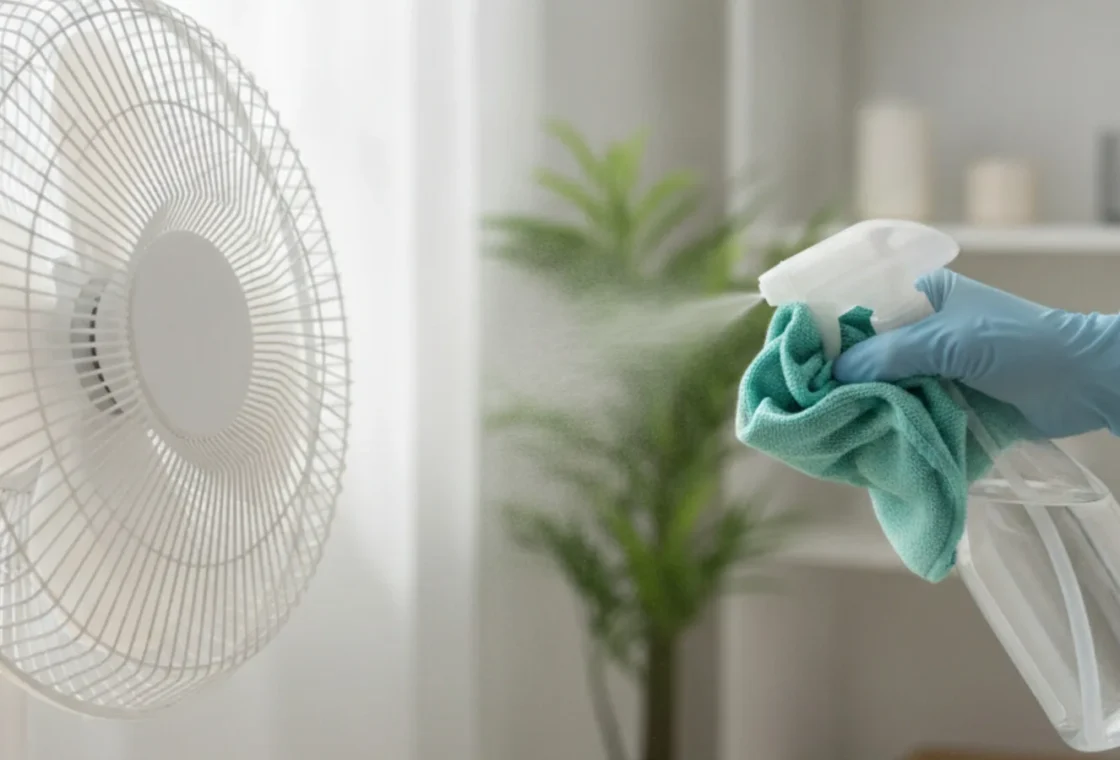
To clean a fan, unplug it, remove or vacuum the grille, wipe or wash the blades with a microfiber cloth and mild soap, blow dust out of vents with compressed air, and let all parts dry completely before reassembly. The specific method varies by fan type, but always keep water away from the motor.
- Always unplug a fan or switch off a ceiling fan at the wall before cleaning to prevent injury.
- Dust buildup forces the motor to work harder, reduces airflow, and can spread allergens.
- Gather all necessary supplies, such as screwdrivers, cloths, and cleaning solutions, before starting.
- Box fans generally allow for full disassembly and washing of plastic parts.
- Most tower fans are not designed to be opened and should be cleaned from the outside.
- Ensure all parts are completely dry before reassembling to avoid electrical hazards and attract less dust.
Gather Supplies
Collect all tools and cleaning agents.
Unplug Fan
Disconnect the fan from power.
Disassemble Fan
Remove grilles and blades if possible.
Clean Parts
Wash or wipe grilles and blades.
Dry Completely
Ensure all parts are fully dry.
Reassemble Fan
Put the fan back together.
Here is how to clean a fan in short: unplug it, lift off or vacuum the grille, wipe or wash the blades with a microfiber cloth and mild soap, blow dust out of any vents with compressed air, and let every part dry completely before you put it back together. The exact method changes with the fan type, because a box fan unscrews, a pedestal fan comes fully apart, most tower fans are not meant to be opened at all, and a ceiling fan is cleaned overhead on a ladder. The one rule that never changes is simple: keep water away from the motor.
Never let water run into the fan motor or submerge the motor housing.
Dust does more than look bad. A clogged grille forces the motor to work harder, pushes less air, and turns the fan into a device that sprays accumulated allergens back into the room every time you switch it on. Below is a practical, type-by-type walkthrough so a dusty fan of any kind ends up genuinely clean rather than just rearranged.
What do you need to clean a fan?
You do not need specialty products. Most of this comes from under the kitchen sink and a junk drawer. Gather your supplies before you start so you are not hunting for a screwdriver with a half-disassembled fan on the counter.
- A Phillips screwdriver, and sometimes a small Allen key (hex wrench) for the safety screw on a pedestal grille.
- Microfiber cloths — at least two, one damp and one dry. Microfiber grabs dust instead of smearing it.
- A can of compressed air, or an electric air blower, for vents and crevices you cannot reach by hand.
- A vacuum with a soft brush attachment for the first dust pass.
- Mild dish soap (a few drops in warm water). A degreasing cleaner only if the fan lives in a kitchen and the blades are greasy.
- A soft-bristled brush, an old toothbrush, and cotton swabs for corners, screw heads, and the gaps in a grille.
- A clean pillowcase for ceiling fans, and an extendable duster if the fan is high or flush-mounted.
- A dust mask and safety glasses — not optional for overhead work or compressed-air blasting.
- A sturdy step stool or ladder for ceiling fans, plus a drop cloth or old sheet for the floor.
One habit applies to every fan on this page: before you touch anything, unplug it from the wall, or for a ceiling fan, switch it off at the wall switch and wait for the blades to stop completely. With the fan unplugged you remove any risk of contacting a live component or of the blades starting while your fingers are near them.
How to clean a box fan
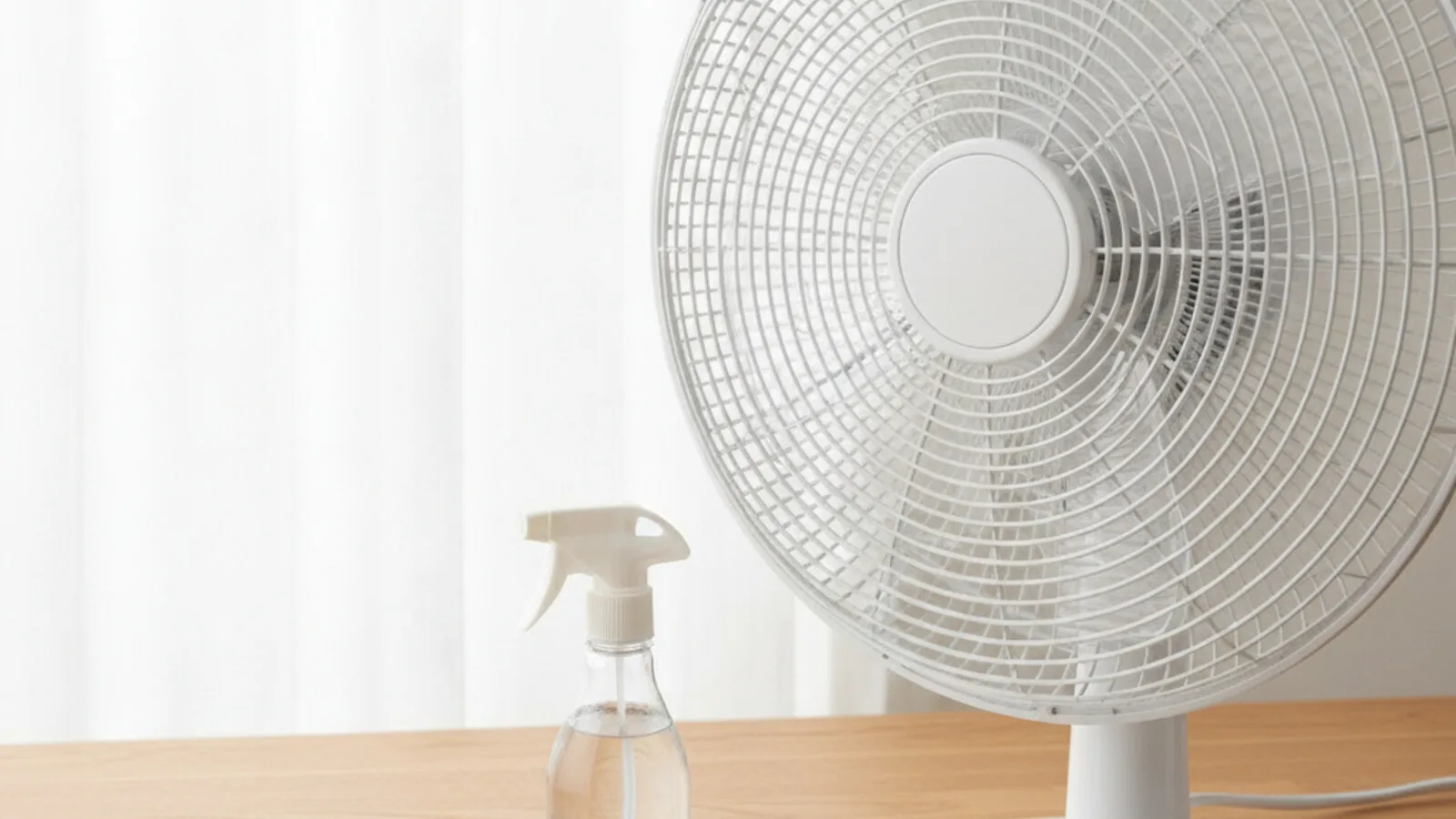
A how to clean a box fan job is the most satisfying because these units open up fully and the plastic parts are washable. The front grille is almost always held by screws around its outer edge — often four, sometimes more — set into the perimeter of the front casing.
- Unplug the fan and set it on a towel on a flat surface. If you want insurance for reassembly, snap a quick photo of how it looks now.
- Use the screwdriver to remove the screws around the edge of the front grille. Drop them into a small cup or bowl so none roll away.
- Lift off the front grille. Depending on the model, the blade is held by a central nut or clip; release it and pull the blade straight off the motor shaft. Some budget box fans have the blade and rear housing fixed — if it does not come free easily, do not force it, and just clean it in place.
- Wash the grilles and the blade in warm water with a few drops of dish soap. These plastic parts can be immersed; a soft brush clears dust packed into the grille slots. Rinse and set aside.
- Wipe the motor housing with a damp cloth only — never submerge it or let water run into the motor vents. Use a cotton swab for the seam around the shaft.
- Let every part dry fully. This is the step people rush and regret. Air-dry for an hour or towel the plastic thoroughly; any trapped moisture near the motor is a hazard and also a magnet for fresh dust.
- Reassemble in reverse: blade back on the shaft and secured, front grille lined up, screws snug but not overtightened. Spin the blade by hand to confirm it turns freely and does not scrape the grille.
Box fans used as makeshift air filters (with a furnace filter taped to the back) collect dust far faster, so expect to clean those more often.
How to clean a tower fan
The how to clean a tower fan question has a surprising answer: on most models, you are not supposed to open it. The blower sits behind a fixed grille, and the manuals for common units — Lasko and Dreo among them — often state outright that the housing should not be taken apart, both because the internals are fiddly and because opening it can void the warranty. So tower fans are cleaned from the outside in.
- Unplug the fan. Lay it down on its back on a towel so you can reach the intake vents, which run up the rear of the column and collect the most dust.
- Vacuum the full length of the intake and output vents with the soft brush attachment to pull off the loose surface dust first.
- Work a can of compressed air into the vent slots to blow the interior dust off the blower wheel. Do this outdoors or in a garage if you can — the goal is to send the dust outside, not redistribute it around the room. Short bursts; do not shake the can, which can spit propellant.
- For stubborn dust wedged between slats, run a soft-bristled brush or a thin crevice tool along the grille before blowing again.
- Wipe the exterior with a dry or barely-damp microfiber cloth. Keep liquids away from the vents and the control panel; water inside a tower fan’s electronics is how you kill it.
- Stand it back up and run it for a few seconds to clear any dust you loosened.
A dust mask is worth wearing here — compressed air sends a visible cloud off the blower wheel. If your specific model does have a removable rear grille (check the manual), you can pop it off for a more thorough clean, but never assume it does.
How to clean a pedestal or oscillating fan?
Pedestal and table fans are the fully-washable category. Everything in front of the motor comes off, so they clean up like new. The one trick that catches people out is the blade cap’s reverse thread.
- Unplug the fan. Find the small safety screw or clip where the front grille meets the rear grille; remove it with a screwdriver or Allen key.
- Rotate the front grille to unlock it from the rear grille’s clips, then lift it away. Turn direction varies by model, so follow the arrows or markings on your fan.
- Hold the blade steady with one hand and twist off the blade cap (the plastic nut at the center). On many models — Blueair notes this for theirs — the cap is reverse-threaded, so it loosens clockwise. Slide the blade straight off the shaft.
- Wash the front grille, the blade cap, and the blade in warm soapy water. These parts can go under the tap. A soft brush gets into the blade roots and the grille wires.
- Wipe the rear grille and the motor housing with a damp cloth only — do not immerse them. Cotton swabs handle the oscillation seams and screw recesses.
- Dry everything completely so no moisture reaches the motor. Towel the parts and let them sit a few minutes.
- Reassemble: blade back on the shaft, cap tightened (counterclockwise, the opposite of removal), front grille clipped to the rear grille, safety screw back in. If the fan vibrates or rattles when you run it, the blade cap or a grille clip is loose — switch off and retighten.
How to clean a ceiling fan?
A how to clean ceiling fan task is less about disassembly and more about doing it safely overhead without showering yourself in dust. The star technique is the pillowcase method.
- Turn the fan off at the wall switch and wait for the blades to stop completely. Lay a drop cloth or old sheet on the floor and furniture below.
- Set up a sturdy step stool or ladder on a flat, level surface directly under the fan. Have someone steady it, and never overreach for the far end of a blade — move the ladder instead.
- Slide a clean pillowcase over one blade all the way to its base, then draw it back toward you. The dust is wiped off and trapped inside the case rather than falling onto the floor. Do each blade in turn.
- For grimier blades, especially in a kitchen where they pick up a greasy film, follow with a microfiber cloth lightly dampened with soapy water or a degreaser, then a dry cloth. Do not press hard — pushing on a blade can bend it and leave the fan wobbling.
- Wipe the motor housing and the light fixture or pull chains with a dry cloth. Keep moisture away from the motor and any wiring.
The pillowcase trick works for moderate dust on a reachable fan. For a very high or flush-mounted ceiling fan, skip the ladder and use an extendable duster with a flexible, U-shaped head that wraps both sides of a blade at once. Brands like Hunter and Minka-Aire build heavier blades that tolerate a firm wipe, but the “don’t press hard” rule still protects the balance of any fan.
How Fan Types Differ
The cleaning approach for a fan changes significantly based on its design.
| Fan Type | Disassembly | Blade Cleaning | Vent Cleaning |
|---|---|---|---|
| Box Fan | Full disassembly | Washable in water | Wipe motor housing |
| Pedestal Fan | Full disassembly | Washable in water | Wipe motor housing |
| Tower Fan | Not designed to open | Not accessible | Vacuum, compressed air |
| Ceiling Fan | Blades removed or wiped | Wipe with damp cloth | Not applicable |
How do you clean fan blades that are greasy or sticky?
Plain dust wipes off dry. A sticky film is a different problem, and it is common on kitchen fans and range-hood fans where airborne cooking grease settles and then cements dust in place. For greasy how to clean fan blades situations, soap and a single wipe will not cut it.
- If the blades are removable, take them off and soak them in warm water with dish soap or a degreaser to loosen the film before you scrub.
- For fixed blades, spray a degreasing cleaner onto the cloth (not the fan), let it dwell for a moment, and make several passes rather than one hard scrub.
- Dry the blades completely afterward. Damp blades attract dust immediately, which undoes the work. Some people finish with a thin wipe of a dust-repellent product, though that is optional.
Which fan is easiest to clean?
Effort varies a lot by design. This table compares the four common types by how you get inside and how much work a thorough clean takes.
| Fan type | How to open | Effort |
|---|---|---|
| Box fan | Unscrew the perimeter screws on the front grille; pull the blade off the shaft | Moderate — tools needed, but parts wash easily |
| Pedestal / table fan | Remove safety screw, twist off front grille, unscrew the reverse-threaded blade cap | Moderate — fully washable, a few fiddly steps |
| Tower fan | Usually does not open; clean through the vents | Low — vacuum and compressed air, no tools |
| Ceiling fan | No disassembly; wipe blades in place from a ladder | Low effort, higher caution — overhead and ladder safety |
What should you never do when cleaning a fan?
Most ruined fans come from a short list of avoidable mistakes. Keep these in mind:
- Cleaning it plugged in. Always unplug first, or switch a ceiling fan off at the wall. No exceptions.
- Getting the motor wet. Grilles and blades can be washed; the motor housing gets a damp wipe at most. Never submerge a motor or spray liquid into its vents.
- Reassembling while damp. Trapped moisture near the motor is both an electrical risk and a dust magnet. Dry every part fully.
- Forcing a tower fan open. If the manual says it does not come apart, prying it risks snapping clips and voiding the warranty. Clean through the vents instead.
- Pressing hard on ceiling-fan blades. It bends them and leaves the fan wobbling. Support the blade and wipe gently.
- Overreaching on a ladder. Move the ladder; do not stretch for the last few inches of a blade.
- Shaking a can of compressed air or holding it upside down, which can spray cold liquid propellant onto parts.
- Skipping the manual. Screw counts, grille turn direction, and thread direction vary by model and brand. The manufacturer’s instructions always win over any general guide.
How often should you clean a fan?
Frequency depends on where the fan lives and how hard it runs, so treat these as starting points rather than rules. Sources genuinely disagree, and the honest answer is “more often than you think, less often than obsessively.”
- Tower, pedestal, and box fans in daily seasonal use: a light dusting or vacuum every week or two keeps buildup down, with a full teardown clean once or twice a month. Lasko, for instance, suggests cleaning its fans once or twice a month during the season.
- Ceiling fans: a quick pillowcase pass every couple of weeks while they run; a wipe-down monthly. Fans that sit idle still collect dust, so dust them before the first use of the season.
- Kitchen and range-hood fans: grease makes these the hungriest. Light cooks can stretch to every two to three months; heavy daily cooking calls for monthly, sometimes every two weeks.
A little maintenance between deep cleans does most of the work. A ten-second vacuum of the grille each week means you rarely face a caked-on, allergen-laden mess, and the motor never has to fight through a blanket of dust.
For ceiling fans, use a clean pillowcase to contain dust when wiping blades.
Quick fan-cleaning checklist
Run through this before, during, and after any fan clean:
- Unplugged (or ceiling fan off at the wall and fully stopped)?
- Right tools ready — screwdriver, microfiber, compressed air, mild soap, mask?
- Photo taken if you are nervous about reassembly?
- Grille removed or vents vacuumed, depending on type?
- Blades and washable plastics cleaned with soap and water?
- Motor housing wiped damp only, never submerged?
- Every part fully dry before reassembly?
- Blade spins freely with no scraping, no wobble?
- Screws and the blade cap snug (remembering the reverse thread)?
- Manual checked for any model-specific quirks?
Clean to that list and any fan — box, tower, pedestal, or ceiling — moves more air, runs quieter, lasts longer, and stops seasoning your rooms with recycled dust.
Frequently Asked Questions
Do I have to unplug a fan before cleaning it?
Yes, always. Unplug a box, tower, or pedestal fan, and switch a ceiling fan off at the wall and wait for the blades to stop. This removes any risk of contacting a live component or of the blades starting while your hands are near them.
Can I wash fan blades and grilles with water?
The plastic grilles, blades, and blade cap on box and pedestal fans can be washed in warm soapy water. The motor housing should only get a damp wipe and must never be submerged. Dry every part completely before reassembling.
How do I clean a tower fan if it does not come apart?
Most tower fans are not meant to be opened. Clean them through the vents: vacuum the slots with a brush attachment, then blow the interior dust off the blower wheel with short bursts of compressed air, ideally outdoors. Wipe the exterior with a dry microfiber cloth and keep liquids away from the vents.
What is the pillowcase method for a ceiling fan?
Slide a clean pillowcase over each blade to its base, then pull it back toward you. The dust is trapped inside the case instead of falling to the floor. For grimier blades, follow with a lightly dampened microfiber cloth, and never press hard enough to bend the blade.
How often should I clean my fan?
It varies with use. Fans in daily seasonal use benefit from a light vacuum every week or two and a full clean once or twice a month. Kitchen and range-hood fans that collect grease need attention every two weeks to three months depending on how much you cook. Always check your manual.